Le Morne Lagoon, Mauritius
| Coordinates | -20.4538, 57.3167 · MRU ~90 min |
| Wind | SE trades; lighter summer, stronger through the May–Oct winter season |
| Water | Flat lagoon inside a coral reef; graded reef waves outside |
| Relaunch room | Open lagoon runout before the reef; check the line for your launch |
| Rescue | ION Club and hotel centres operate on the bay |
| Rules | Kite-priority zone marked; no foiling inside the swim buoys |
| Level | Lagoon beginner-friendly · outside the reef advanced |
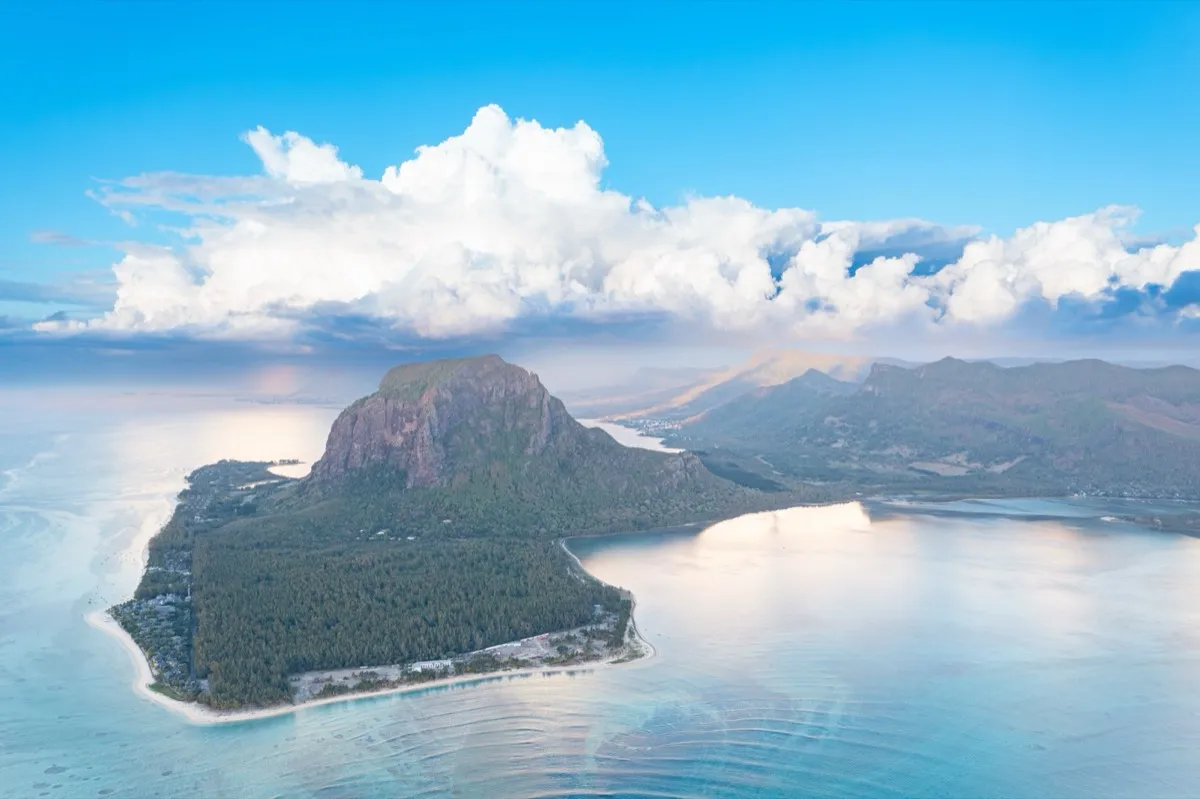
Le Morne is the venue most parawing riders in the Indian Ocean mean when they say Mauritius: a flat turquoise lagoon held in by a coral reef, with the mountain standing over it and world-class waves breaking outside. The SE trades wrap around the peninsula and blow across the lagoon, which is what makes the inside so consistently rideable while the reef takes the swell.
For a parawing rider the venue splits cleanly in two. Inside the reef is where you learn and drill: flat water, room to drift, and a failure that ends with you standing up rather than swimming. The graded reef outside is a different sport, and it is where this site’s documented sessions actually happened, on the middle step of the reef: see the Manawa profile for how that goes on a wing you have to stash before the wave.
How to use it
Ride the lagoon on a rising or high tide and scout your lines before committing a long mast, since depth varies by section and tide rather than being uniform. Keep inside the marked kite-priority zone and out of the swim buoys. The lagoon carries boat traffic from the hotels through the day, and a stashed parawing leaves you with no visible sail, so make yourself visible on the belt and stay clear of the channel.
This profile is a working guide to the venue rather than a logged session report; the wave-side documentation lives on the Manawa page.
FAQ
Can I learn to parawing at Le Morne?
The inner lagoon is the shelter you want: flat water, standing depth in places, and room to drift before the reef. Stay inside the kite-priority markers, mind the shallow corners at low tide, and treat depth as tide-dependent rather than fixed.
Which parawing size at Le Morne?
Depends on the season and your weight rather than on the spot: the winter trades run considerably stronger than the summer ones. Size from the wind you actually read on the day with the [size calculator](/tools/parawing-size-calculator/), and expect to be overpowered more often in winter.
Is the One Eye channel doable on a stashed wing?
Only on the biggest days with boat cover. The current in the channel outruns a swimmer. Treat it as expert-only and never solo.