Hood River, USA
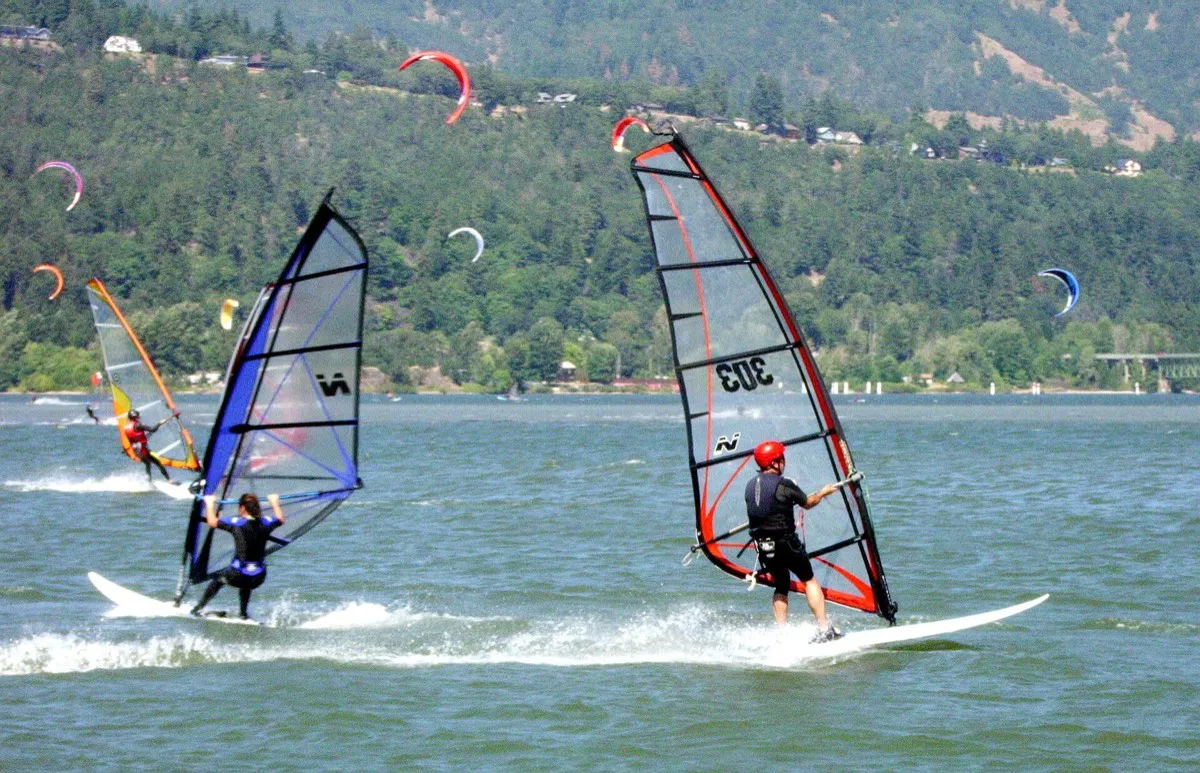
| Coordinates | Event Site ~45.71°N, 121.50°W; ~1 hr from Portland (PDX) |
| Wind | W thermal, 15-30 kt normal, up to 40 kt; strongest afternoons; May-Sep season (wingfoilweather.com) |
| Water | Cold freshwater; wind-against-current swell on the main river; flat pockets behind Wells Island and at The Hook |
| Relaunch room | Miles of open river on the shuttle runs; stay 200 m clear of the shipping channel |
| Rescue | No dedicated spot rescue listed: self-supported river; schools and shops in town (Big Winds, Cascade Kiteboarding, Wylde Wind & Water) |
| Rules | Starboard tack priority; wave-riders have priority; give kiters wide clearance; barges have right-of-way; Event Site parking fills by 11am |
| Level | Advanced on the main river; The Hook and the Lyle sandbar for progression |
An hour east of Portland, the Columbia River cuts through the Cascades and the Gorge works as a wind funnel: westerlies get compressed against roughly 100 miles of river and blow against the current. That collision makes the place. Wind-against-current stacks up swell on the main river, so even though Hood River lives in our flat-water spots index for its sheltered corners, it is fundamentally a downwind venue: the North American hub for parawing downwind riding.
The wind
A thermal machine. A normal summer day delivers 15-30 kt of westerly, strong days reach 40 kt, and the afternoons blow hardest (wingfoilweather.com). The season runs May through September with a summer peak. Two practical consequences for a parawing rider. Size down from what the forecast number suggests, because the thermal is gusty rather than laminar. And use the mornings if you are still working on handling. The same day that is friendly at 10am can be survival conditions by 4pm. If gusts still catch you out, work through gust management before committing to the main river.
The runs
Swell City to the Hatchery is the established shuttle run, with Maryhill, Rufus and Arlington further east. The parawing downwind culture here is real: riders stash, connect the wind-against-current bumps, and redeploy at the take-out, exactly the skill chain covered in pumping and connecting bumps. Full run logistics live in the dedicated Columbia Gorge run profile. A launch-by-launch directory of the whole Gorge is maintained at The Gorge Is My Gym.
Is there any flat water?
Pockets, not plains. Flat water exists behind Wells Island and at The Hook, and those are your progression zones on the Oregon side. For a true beginner, though, the answer is not Hood River at all. SA Kitesurf Adventures runs a flat sandbar spot at Lyle, WA, 15 minutes east, which is far better for learning. Wylde Wind & Water in town runs free intro clinics; Big Winds, Cascade Kiteboarding, Gorge Performance and Hood River Waterplay cover gear and lessons.
The hazards
Three that matter, in order.
Barges. Commercial traffic uses the shipping channel, has right-of-way, and cannot stop or maneuver for you. The parawing-specific problem: once you stash mid-run, you lose the one large, visible object that marked your position. A rider lying prone on a foilboard is close to invisible from a wheelhouse. Stay 200 m clear of the channel, and plan your stash points so a lull never leaves you drifting toward it.
Cold freshwater. Not a boardshorts venue. Cold water shortens the time you can spend on a repack gone wrong, so your deep-water routine needs to be automatic before you ride the runs.
Gusts and swell together. The same wind-against-current interaction that makes the runs good makes the main river rough. Strong, gusty and cold. Nobody’s first-trip flat-water spot.
Rules and etiquette
Starboard tack has priority, wave-riders have priority on a bump, and you give kiters wide clearance: the Gorge is shared with a large kite and windsurf population. Oregon and Washington sides have separate regulations, so check the side you launch from. Arrive before 11am if you want Event Site parking in summer.
Logistics
Hood River town is walkable, with breweries and gear shops clustered near the water. Tucker Park has camping and vanlife is common along the Gorge. Nearest airport is Portland (PDX), about an hour west.
Who it’s for
Riders who already have the stash-glide-redeploy cycle wired and want a genuine downwind scene, shuttle infrastructure, and other parawing riders on the water: a combination that barely exists anywhere else in North America. Still learning? Use Lyle and The Hook, or pick a warm shallow venue from the spots index and come back to the Gorge with the skills to enjoy it.
FAQ
Is Hood River good for learning to parawing?
Not on the main river: it is strong, gusty and cold, with wind-against-current swell and barge traffic. Learn in the flat pockets at The Hook or behind Wells Island, or drive 15 minutes east to the flat sandbar spot at Lyle, WA, then move onto the river once you can stash and redeploy reliably.
When is the wind season in Hood River?
May through September, with the summer thermal peak. Westerlies run 15-30 kt on a normal day and can reach 40 kt, and afternoons blow strongest. Mornings are the lighter, more forgiving window.
Can you do parawing downwind runs in the Columbia Gorge?
Yes. This is the point of the place. Established shuttle runs like Swell City to the Hatchery, Maryhill, Rufus and Arlington have a real parawing downwind culture, with wind-against-current swell to connect. Treat them as advanced: gusty wind, cold water and commercial traffic.
How windy does Hood River get?
15-30 kt is a normal summer day, with days up to 40 kt, per wingfoilweather.com. The wind is thermal (westerlies funneled down the Gorge), so it builds through the day and peaks in the afternoon.