Mui Ne, Vietnam
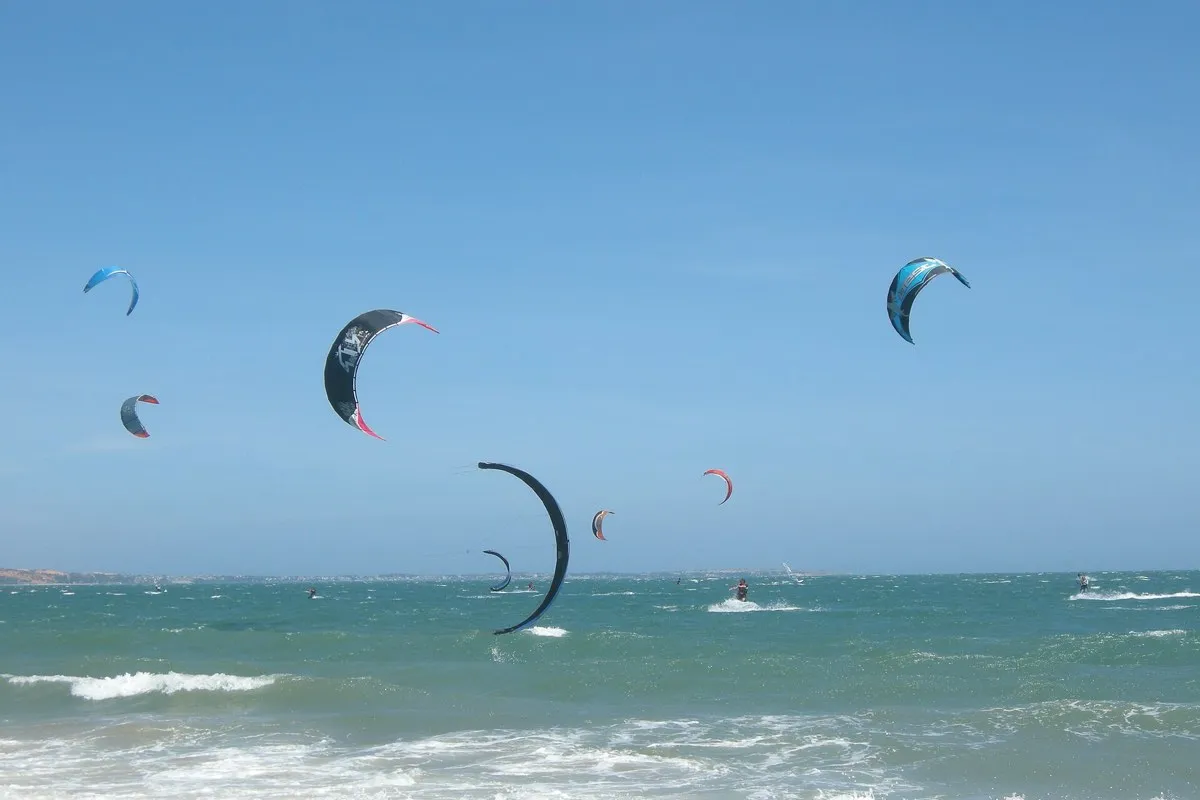
| Coordinates | ~10.93°N, 108.29°E (Phan Thiet, SE Vietnam) |
| Wind | NE monsoon Nov-April, 15-30 kt (peak Dec-Feb 20-25+ kt), cross-onshore |
| Water | Rang Beach flat-to-choppy in light morning wind, sandy bottom, no reef; afternoon swell/shore-break builds |
| Relaunch room | Open sandy beach, no reef in main zones; morning is the flat window |
| Rescue | Schools provide launch/rescue support; shore-break and afternoon swell are the hazards |
| Rules | Schools close ~5pm (wind unpredictable after); no formal permit |
| Level | Beginner (mornings) to advanced (afternoon swell) |
Mui Ne is Vietnam’s headline wind spot, and on paper it reads like a good parawing prospect. Honesty first, though: no documented parawing sessions here are on record. What follows is an assessment inferred from heavy wing- and kitefoil use at the same beaches, not from logged parawing riding. Read it as a lead to investigate, not a proven flat-water spot.
Wind and water
The spot sits at Phan Thiet on the southeast coast (~10.93°N, 108.29°E), a four-hour drive from Ho Chi Minh or a short hop to the new Phan Thiet airport. The NE monsoon runs November through April at 15-30 kt, cross-onshore and thermally accelerated by the coastal dunes, peaking December to February at 20-25+ kt. Summer flips to a lighter, less reliable SW airflow, so plan a winter trip.
Rang Beach (“Mui Ne Beach”) is flat-to-choppy in the light morning wind and develops swell and shore-break as the wind builds through the day. The bottom is sand with no reef in the main zones. That morning window is the flat-foil opportunity; Ganh Beach nearby has smoother wind but more waves. If you are unsure whether the profile fits your session plans, the spot finder frames the trade-off between a reliable-but-time-limited flat window and an all-day lagoon.
Why the parawing verdict is provisional
A parawing’s defining hazard is that a stashed or dropped wing floats low and invisible and drifts faster than you can swim. On the sandy, reef-free morning water that risk is manageable, which is why the beach looks suitable. But the afternoon shore-break changes the calculation: an invisible wing washed into breaking water near a busy beach is a real problem. Until someone logs actual parawing sessions here, keep to the morning flat window, ride through a school for launch and rescue cover, and drill your self-rescue and drift before you rely on the spot.
Bring your own kit; the local centres stock wing and kite gear, not parawings (see the parawings hub). Cheap beachfront lodging and easy logistics make Mui Ne a low-cost place to find out whether the morning window delivers.
FAQ
Can you parawing at Mui Ne?
There are no documented parawing sessions at Mui Ne on record. It is a proven wing- and kitefoil spot, and the sandy, reef-free beaches with a flat morning window look suitable, but that is an inference from other foil disciplines rather than logged parawing use. Bring your own kit and treat it as an exploratory venue.
When is the wind season in Mui Ne?
The NE monsoon blows November through April, 15-30 kt, strongest and most consistent from December to February at 20-25+ kt. Summer brings a lighter, less reliable SW airflow. Mornings tend to be lighter and flatter; the wind and swell build through the afternoon.
Is Mui Ne flat water or waves?
Both, depending on time of day. Rang Beach is flat-to-choppy in the light morning wind, which is the flat-foil window, then develops swell and shore-break as the wind fills in the afternoon. Ganh Beach has smoother wind but more waves. The bottom is sand with no reef in the main zones.
Do I need a permit to ride Mui Ne?
No formal permit is required. Schools operate along the beachfront and generally close around 5pm because the wind gets unpredictable after that. Riding through a school gives you launch and rescue support, which matters given the afternoon shore-break.