Coronation Beach, Australia
| Coordinates | -28.66, 114.60 |
| Wind | Side-off SE seabreeze in the late afternoon; commonly 20–30 knots |
| Water | Outer reef and headland shelter a flat-water bay; reef break on the outer edge |
| Relaunch room | Good — a protected flat-water bay to relaunch and return |
| Level | Advanced–Expert |
Where and what is Coronation Beach?
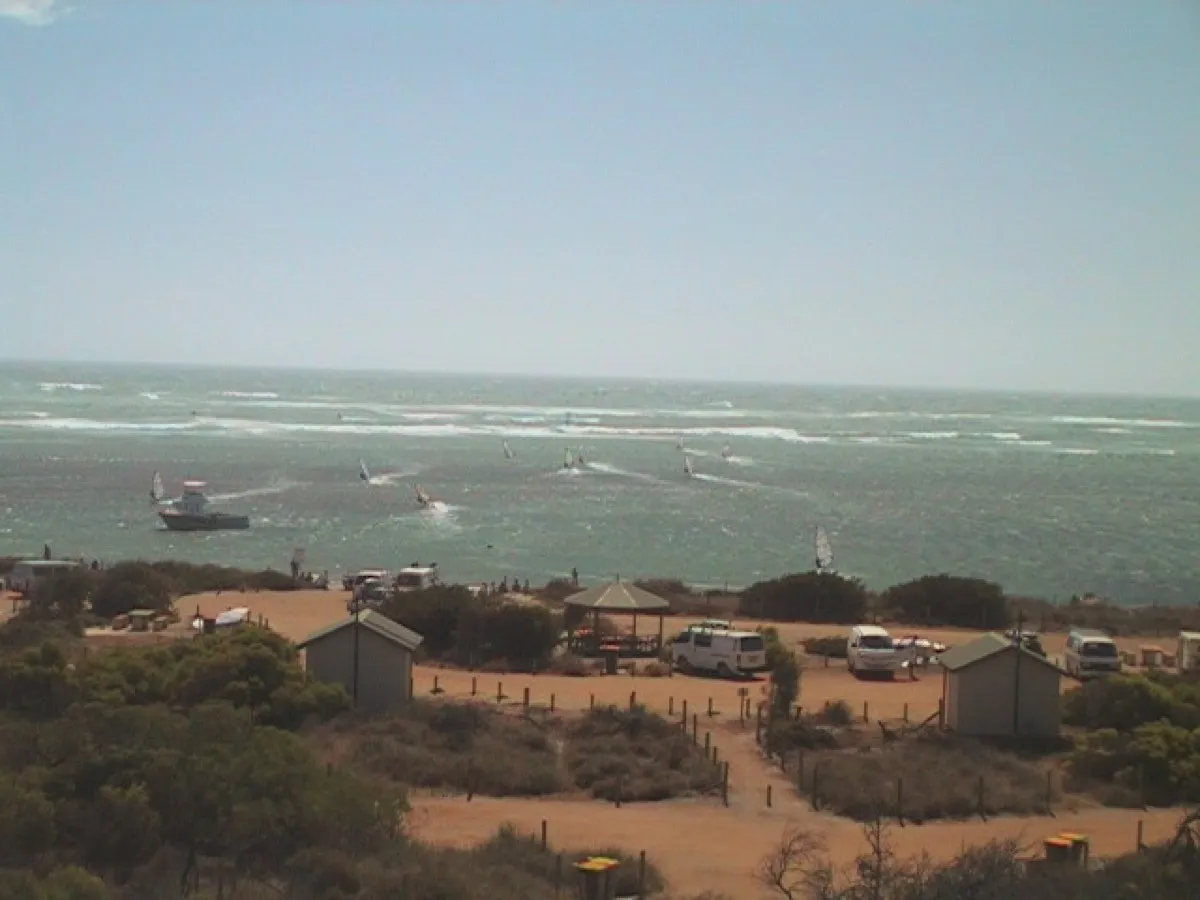
Coronation Beach — “Coros” — sits about 20 minutes north of Geraldton in Western Australia and ranks among the windiest, finest kite and wing spots in the world. An outer reef and headland create a protected flat-water bay for the return, while the outer edge holds a reef break that turns on for “truly unforgettable wave riding” as the wind swings side-off in the late afternoon. Most days in season reach 20–30 knots — small-gear territory.
This profile is an assessment, not a record. There are no documented parawing sessions at Coronation Beach. What follows is inferred from kite and wing reports of the same spot, so read it as a strong inference rather than proven parawing riding.
Is Coronation Beach suitable for parawing riding?
On paper this is close to a perfect parawing layout. A flat-water bay gives you sheltered space to relaunch and return; the side-off reef wave gives you something to ride; and the site even has the only IKO centre in WA (KiteWest), which also teaches wing foiling — so there is an established foil scene on the ground.
What it lacks is a parawing track record. The suitability read is genuine but inferred. If you ride here, respect the side-off wind: it pushes you away from shore, so your self-rescue and drift plan matters, and small, reliable gear is the norm given how windy Coros gets.
Hazards and conditions
- Strong wind — routinely 20–30 knots; size down and expect small-gear days.
- Remoteness — bring your own water and food; there is little on site beyond the school.
- Sharks — a genuine WA presence to plan around.
- Side-off exposure — the flat-water bay is the safety net, but a wind drop on the outer reef would leave you downwind of it.
Bottom line
Coronation Beach has arguably the best raw layout of any wave spot assessed here — sheltered relaunch, side-off wave, on-site foil instruction — held back only by remoteness and shark presence. Until parawing sessions are documented, take it as a strong inference. See the wave spots hub or the spot finder to line it up against alternatives.
FAQ
Is Coronation Beach good for parawing?
By analysis it is close to ideal — a flat-water bay to relaunch, a side-off reef wave, and on-site wing instruction. But there are no documented parawing sessions here; the read is inferred from kite and wing records at 'Coros'.
How windy is Coronation Beach?
It is among the windiest kite and wing spots in the world. Most days in season reach 20–30 knots — small-gear, 7–8 m kite territory — with the wind swinging side-off in the late afternoon.
When is the season at Coronation Beach?
The season runs from mid-October to late March, the Southern Hemisphere summer, with the most consistent strong seabreezes through the December–February core.
What are the hazards at Coronation Beach?
Strong wind (bring small gear), remoteness — bring your own water and food — and sharks in WA waters. It is a remote spot, so plan for self-reliance.