Axel Mazella
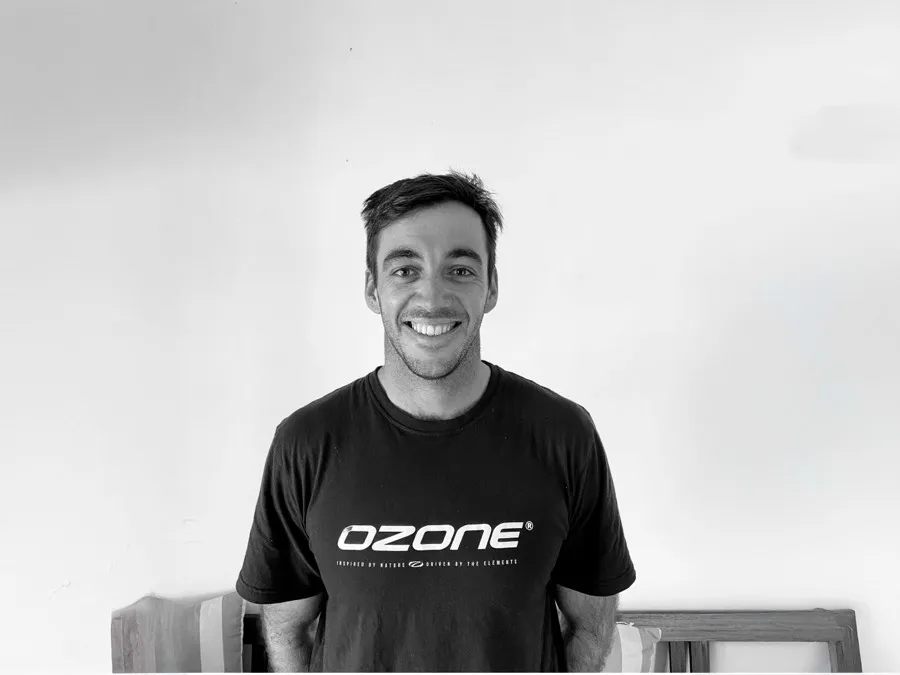
| Parawings | Ozone Pocket Rocket (development rider) |
| Style | Rides powered up using a harness (his stated preference) |
Tips library: attributed, timestamped
“The Pocket Rocket is pure freedom… I like to ride powered up using my harness and the upwind performance is similar to a wingfoil.”
Attributed to Mazella in our research notes; the original outlet is not documented, likely Ozone materials, unverified
Riding upwind on a parawing → Parawing database → All rider profiles
Who is Axel Mazella?
A French Olympic-level kite racer who now works as an Ozone R&D rider, and one of the clearest signals of where parawing racing is headed. Mazella develops the Ozone Pocket Rocket, the parawing Patrick Rebstock logs his long freeride runs on, and he sits inside the top 10 of the 2026 overall SFT Downwind Parawing men’s ranking, the sport’s first sanctioned world series. When Olympic-class kite racers start showing up in a two-year-old discipline’s rankings, the amateur-hour phase is over.
The pedigree matters for one reason. No wind-sport discipline obsesses over upwind angles like kite racing does, and upwind is exactly where first-generation parawings were weakest. A racecourse specialist inside Ozone’s development loop is a competitive advantage for the brand, and his headline claim targets that exact weakness: “The Pocket Rocket is pure freedom… I like to ride powered up using my harness and the upwind performance is similar to a wingfoil.” Rider to rider, a caveat. The original outlet for that quote is not documented, and a development rider praising his own product is not a neutral review. Independent testing points the same direction: reviewer Bowen Dwelle ranks Ozone among the best-upwind parawings alongside F-One and Flysurfer, so the claim is plausible. Still, treat “similar to a wingfoil” as a sponsored rider’s framing until someone measures it.
What to take from his approach
Powered-up riding with a harness is a racer’s choice, not a default. Mazella’s stated preference cuts against the most common community advice: Bowen Dwelle explicitly recommends skipping the harness line for short wave laps because it adds tangle risk. Both are right in context. Mazella is holding power through long upwind legs on a racecourse; a freerider doing short laps is stashing constantly. Work out which rider you are before copying either. The technique both approaches depend on is covered in our guide to riding upwind.
Upwind is the racing battleground. At Leucate, the SFT format mixed upwind, crosswind and downwind legs. You cannot podium on downwind glide alone. Mazella’s whole value to Ozone is racecourse VMG. If you want to race, weight your gear choice toward upwind performance; the parawing database lists what each wing is built for.
What we haven’t verified
Documented: his nationality, Olympic kite-racing background, Ozone R&D role, Pocket Rocket development work, top-10 2026 ranking, and the quote above. Not documented: his exact ranking position or points (rankings update after each stage), his age, home spot, board and foil setup, event-by-event results, or social channels. Setups and roles change fast in this sport. Read these specifics as a point-in-time snapshot for 2025–2026.