Patrick Rebstock
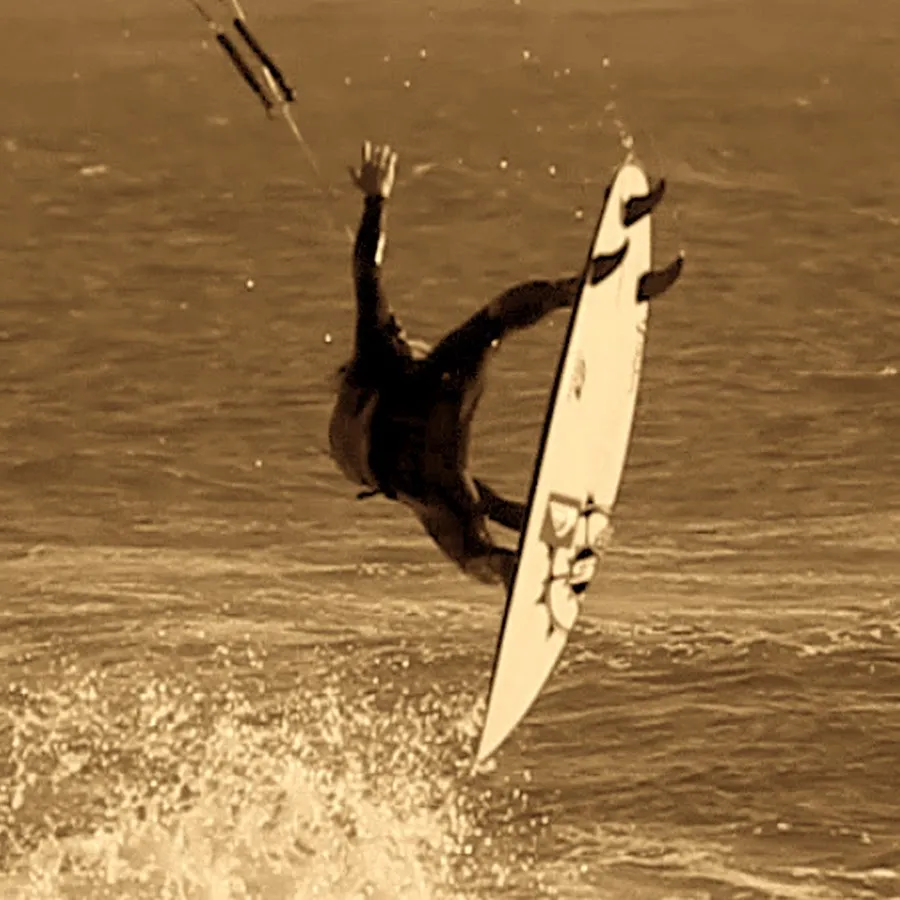
| Parawings | Ozone Pocket Rocket / PowerPack (Ozone ambassador) |
Tips library: attributed, timestamped
“Understand energy dynamics, groundswell vs windswell, and local geography before going out.”
Paraphrased from his LabRat Foiler Podcast appearance; not verified verbatim against the audio
Downwind glide → Stashing mid-ride → Self-rescue and drift planning
The 14-mile benchmark
While the racing scene fought over podiums at Leucate and Cabarete in 2026, Patrick Rebstock was logging a different kind of benchmark: long freeride and downwind runs of roughly 14 miles, upwind and downwind legs mixed, on Ozone’s Pocket Rocket and PowerPack parawings. He rides as an Ozone ambassador and is one of the discipline’s serious long-distance freeriders. Most sessions in this sport get measured in laps off one beach. A 14-mile mixed-direction run says a lot about what the gear can handle, and even more about the planning behind it.
He has also guested on the LabRat Foiler Podcast, and his topics there tell you what kind of rider he is: safety, geography, groundswell versus windswell, packing technique. That list is what keeps a long-distance parawinger alive and moving, which is why his episode keeps getting cited in the community’s tips canon.
What to take from him
Read the water before you trust it. His core advice, paraphrased from the LabRat Foiler appearance: understand energy dynamics, the difference between groundswell and windswell, and the local geography before going out. On a 14-mile run there is no restarting from the beach. The swell you commit to is the swell you ride. Our guide to the downwind glide covers the swell-reading fundamentals his approach depends on.
Packing technique is a range-extender. Covering that distance while mixing upwind and downwind legs means stashing and redeploying the wing over and over. Packing was one of his named podcast topics for a reason: a sloppy stash on mile three becomes a tangle problem on mile ten. Start with stashing mid-ride and treat it as a safety skill, not a convenience.
Plan for the run you might not finish. Safety and geography headline his podcast appearance. Long freeride runs multiply every risk a short session hides: dying wind, drift, distance from shore. Before attempting anything like his mileage, work through self-rescue and drift planning.
What we haven’t verified
The limits of this profile, stated plainly. Our sources document his Ozone ambassadorship, his gear (Pocket Rocket / PowerPack), the ~14-mile runs, and his LabRat Foiler guest topics, but no verbatim quotes, no home spot, and no competition results (he does not appear in the 2026 SFT parawing rankings we have). The advice above is paraphrased from podcast audio via secondary text sources, not transcribed verbatim. Sponsorships and setups change fast in this sport; treat the specifics as point-in-time for 2025–2026.