Balz Müller ("Radiculo")
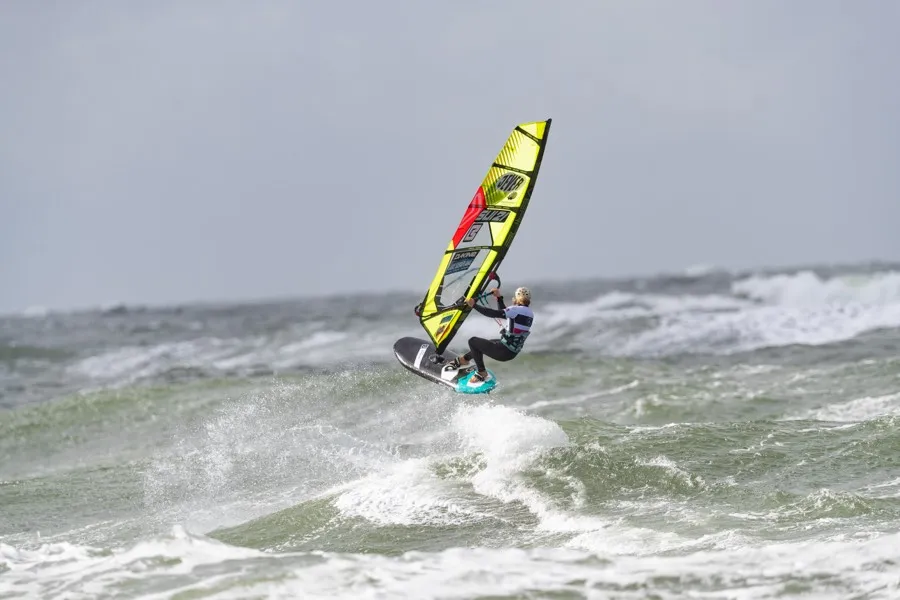
| Parawings | ENSIS Roger (ENSIS team rider) |
| Board | Downwind board paired with a pump foil for light-wind training (per LabRat Foiler Podcast) |
| Foil | Big foils for light-wind starts, pump foil for training steering (per LabRat Foiler Podcast) |
| Channels | Instagram @radiculo (63K followers) |
Tips library: attributed, timestamped
“Parawinging could be the ultimate water sport discipline. It's so pure and connected… We're on v1 — imagine the v3 in a couple of years!”
Paraphrased from LabRat Foiler Podcast
“has to be in these five knots of range”
Paraphrased from LabRat Foiler Podcast, on the narrow wind range of early single-skin parawings
“big foils are lame… but on a big foil, getting up is so easy”
Paraphrased from LabRat Foiler Podcast, on his light-wind approach
Freestyle and 360s on a parawing → Single-skin (glossary) → Parawing database
Who is Balz Müller?
If Balz Müller is on the water, odds are he is upside down. “Radiculo” built his name pioneering windsurf-foil and wingfoil freestyle on Lake Biel and the other Swiss lakes, and he now runs the same program on a parawing: big moves, freestyle lines, and a public bet that the sport’s ceiling sits well above racing courses. His Instagram @radiculo has 63K followers, a rare follower count in this sport that actually checks out. He rides for ENSIS on their Roger parawing; more freestyle-minded riders live in the riders index.
He races too, though ranking points are not the story. Named starter at the first SFT Downwind Parawing World Cup in Leucate (April 2026, 30-man fleet). 9th in the 2026 overall men’s parawing ranking as of early July 2026, and 24th in the SFT men’s Pump Foil ranking as of late July 2026. Both per the SFT rankings, which update after every stage.
What to steal from his approach
Big foils for light wind. On the LabRat Foiler Podcast he put it plainly: “big foils are lame… but on a big foil, getting up is so easy.” Same start-big logic every credible coach repeats, except this time from a rider who could get up on anything. His extreme version: roughly 3 knots of wind, pump foil, downwind board, parawing used purely to train steering. Don’t copy the number. Copy the principle: oversize the foil until getting up is boring, then work on the wing. The learning path on freestyle and 360s builds on the same base.
Single-skin range, stated without spin. Müller is blunt that early single-skin parawings have minimal wind range (it “has to be in these five knots of range”) and that the practical fix is carrying more sizes, not wishing the wing were something else. That is a real cost of the sport in 2026. A quiver problem, not a one-wing solution. Factor it in before buying; the parawing database lists claimed ranges per size.
Gear and spot choice “makes it all.” Also from the LabRat Foiler episode: he puts session quality down to matching equipment and location, not talent. Coming from someone with his talent, take that seriously.
Why he matters
Every young discipline needs someone testing what the equipment will not officially do. Racing establishes legitimacy; Müller’s job is establishing vocabulary. His vision, paraphrased from the LabRat Foiler Podcast: “Parawinging could be the ultimate water sport discipline. It’s so pure and connected… We’re on v1 — imagine the v3 in a couple of years!” Given how fast the first design generation has moved, read that as a roadmap rather than hype.
Before you build on any of this, three caveats. His light-wind numbers come from an elite pumper on flat Swiss lakes and will not transfer to average riders or open water. The quotes here are paraphrased from podcast audio, not checked verbatim against the recording. And sponsorships and setups change fast in this sport, so treat his gear list as a snapshot of 2025–2026.