Berkeley, USA
| Wind | Thermal westerly, typically 15+ kt from the west at Treasure Island and the East Bay, best Apr–Sep |
| Water | Tidal saltwater; current can run to ±4.5 kt — a defining hazard |
| Rescue | VHF ch16 treated as critical (phones/watches lose service offshore); Coast Guard SF Command 415-399-3451; buddy usually finishes the run before triaging |
| Rules | Hi-vis jersey or PFD strongly urged, VHF, buddy system + float plan (SFBA downwind guide) |
| Level | Advanced–expert; Berkeley preferred East-Bay exit (better amenities, less rebound than Emeryville) |
Is Berkeley a parawing run?
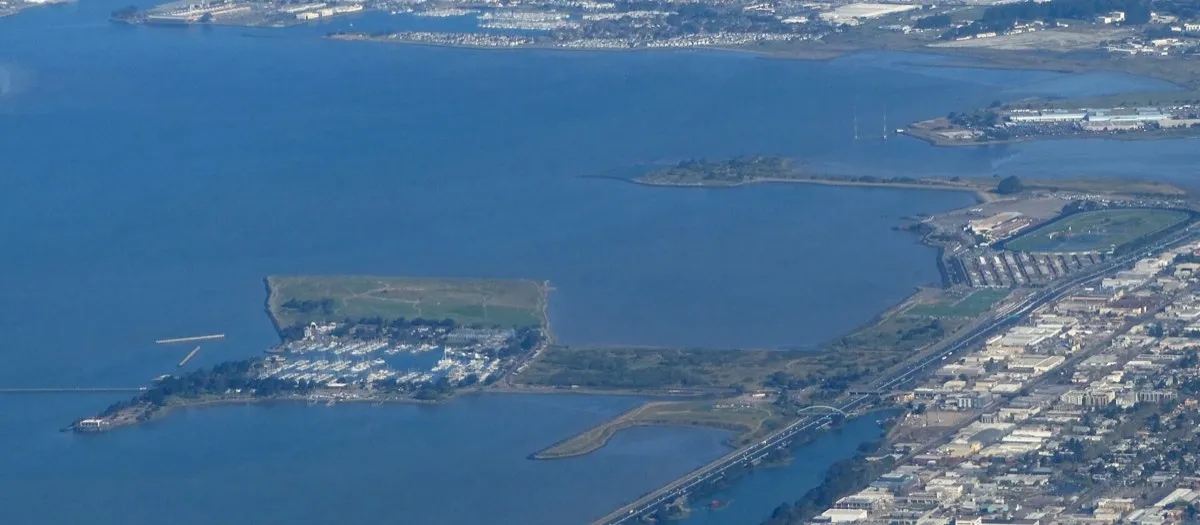
Berkeley is the preferred East-Bay takeout for San Francisco Bay downwind lines from Treasure Island and the East Bay — roughly 10–15 km on the summer westerly. It reads as a plausible single-stow parawing line, but documented parawing use is not established. The assessment below is inferred from the bay’s deep wing and kite downwind record, not from proven parawing sessions.
Wind and water
The bay’s thermal westerly is best April through September, running typically 15+ kt from the west at Treasure Island and the East Bay — the conditions the community relies on for consistent swell. Because the bay’s islands, bridges and bathymetry break up any straight downwind vector, swell shows up only in select corridors, and the East-Bay lines into Berkeley are among them.
The defining hazard is the current, which can run to ±4.5 kt — locally described as faster than an Olympic swimmer. Berkeley is chosen as the East-Bay exit specifically because it has better amenities and less wave rebound than the Emeryville alternative.
Safety
The San Francisco Bay Association publishes a detailed downwind guide, and self-reliance is the local ethic: a buddy usually has to finish the run before they can turn back to help. A VHF radio on channel 16 is treated as critical because phones and watches lose service offshore. A fluorescent hi-vis jersey or PFD is strongly urged — without a wing up you are nearly invisible to boat traffic — alongside a waterproof-cased phone for GPS, a buddy system and a float plan. Coast Guard SF Command is 415-399-3451. Practise your self-rescue and drift before committing to a line with this current and this much shipping.
Where the parawing fits
Because the main danger is current and shipping rather than shorebreak, the parawing’s relaunch capability is a genuine asset over a deflated wing — you can redeploy and power back upwind. That is an argument from the gear, though, not a session log. Bring range for the variable bay wind and keep your glide efficient across the light patches between corridors.
Compare it with other downwind runs or match the bay’s westerly to your level with the spot finder.
FAQ
Where do the East Bay downwind runs finish?
Berkeley is the preferred East-Bay exit — better amenities and less wave rebound than Emeryville. The lines typically start from Treasure Island or the East Bay and run roughly 10–15 km on the summer westerly.
Is Berkeley suitable for parawing foiling?
The 15+ kt westerly and open East-Bay fetch look well suited to a single-stow parawing glide, but no documented parawing sessions here are on record. The read is inferred from the bay's established wing and kite downwind use, so treat it as suitable-by-analysis.
Why is this rated advanced to expert?
The current can run to ±4.5 kt and shipping channels cross the bay, so the run demands strong self-reliance. A buddy usually has to finish the run before turning back to triage a rescue, which is why VHF, hi-vis and a float plan are the local norm.