Hawaii Kai Run, United States
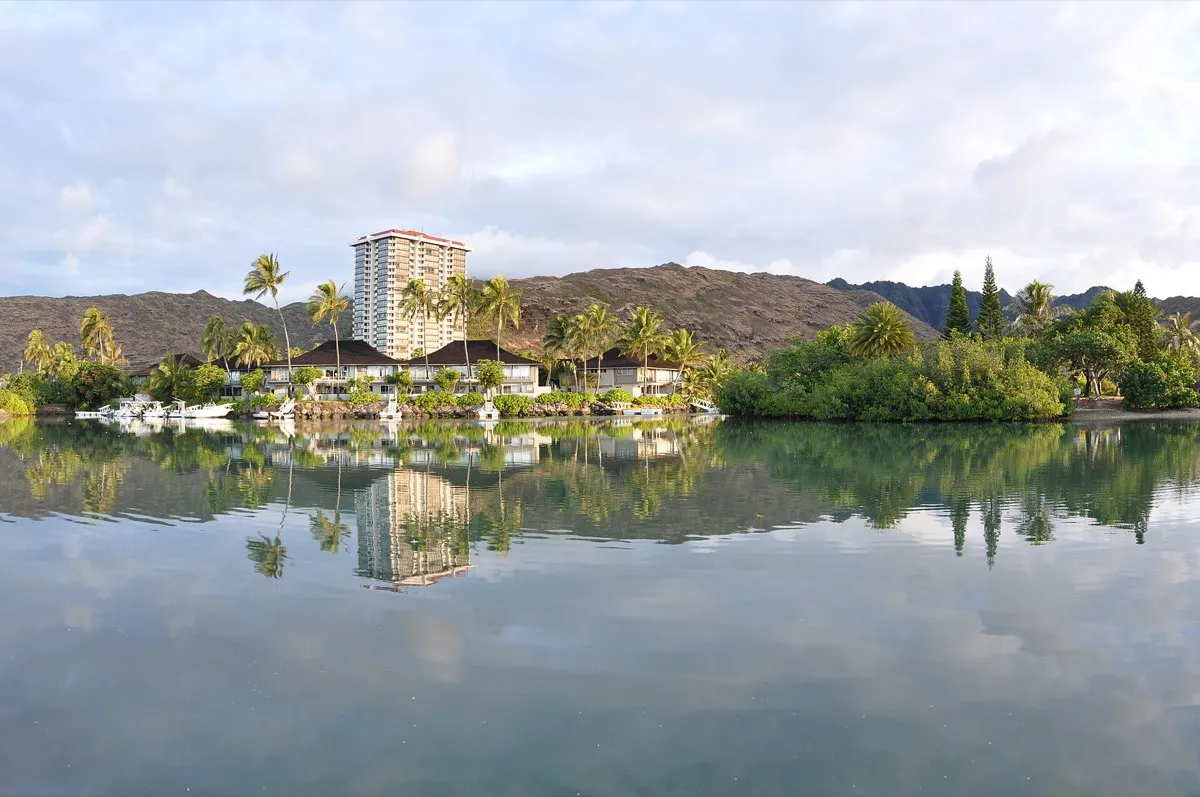
| Wind | E/NE trades; good conditions ~70% of the time, better in summer; Kahala coached in 5-20 kt |
| Water | Open-ocean south-shore bumps; reefs and channels near shore |
| Rescue | One-way run; south-shore reefs and channels; crux at the start and finish |
| Rules | Hawaii Kai Marina bans foiling in high-speed zones unless towed |
| Level | Full run Expert; Hawaii Kai to Kahala Intermediate |
Hawaii Kai Run, United States
The Hawaii Kai Run is Oahu’s benchmark south-shore downwinder - about 9 miles (14.5 km) on E/NE trades - with a gentler ~5 mile Hawaii Kai to Kahala line that is one of the best places anywhere to learn bump riding. It is a proven SUP-foil and prone run, but documented parawing riding here is not established; the parawing read below is inferred from those steady trades and clean bumps, not from logged parawing sessions.
The run
The full Hawaii Kai Run follows the old Battle of the Paddle course roughly 9 miles from Hawaii Kai toward Waikiki - the benchmark “against which all other runs are compared.” The gentler Hawaii Kai to Kahala line is about 5 miles of smaller, easier bumps, and it is one of the best places in the world to learn bump riding. E/NE trades give good conditions around 70% of the time, better in summer than winter; coaches run the Kahala route in 5 to 20 kt. Guided options through Blue Planet and Wet Feet Sports run transport from Waikiki, so you can lap the run without owning the shuttle logistics.
The parawing question
Here is the honest part: the proxy data is largely SUP-foil and prone, not parawing. Nobody has published a parawing session on this run. That said, the ingredients - steady trades and clean, open-ocean bumps - are exactly what a single-stow parawing run wants: power up, stash the wing, and glide the bumps home. The crux for a parawing rider specifically would be the take-off in the offshore boat-channel start, where the wind blows off the land. Everything in this paragraph is inference from the run’s character, not proven parawing riding - scout it as a lead, not a logged spot.
Safety and rules
The run is trickiest at the start, with offshore wind out of the boat channel, and again at the finish, with south-shore reefs and channels to read throughout. The Hawaii Kai Marina bans foiling in its high-speed zones unless you are towed, so mind the channel. It is a one-way, open-ocean line with limited bailouts - the full run is an expert commitment, while the Kahala route is intermediate-friendly. Be solid on self-rescue and drift before the offshore start, and comfortable riding upwind on both tacks so a dropped wing on the bigger line is recoverable.
Season
Summer is the window for the full run, when the trades are most reliable; the Kahala option works year-round for progression.
Comparing Oahu against other benchmark lines? See the full list of downwind spots or run the spot finder to match a run to your level.
FAQ
Has anyone parawinged the Hawaii Kai Run?
There is no documented parawing riding here. The run is a proven SUP-foil and prone downwinder, and the parawing assessment is inferred from its steady trades and clean bumps. It reads as a strong single-stow parawing line, but nobody has published a parawing session on it.
What is the difference between the full run and the Kahala option?
The full Hawaii Kai Run is ~9 mi (14.5 km) of bigger open-ocean energy and is an expert commitment. The Hawaii Kai to Kahala line is ~5 mi (8 km) of smaller, easier bumps - one of the best places in the world to learn bump riding, and coaches run it in 5 to 20 kt.
When are conditions best?
E/NE trades give good conditions roughly 70% of the time, and it is better in summer than winter. Summer is the peak window for the full run; the Kahala route works year-round for progression.
What are the hazards and rules?
The crux is at the start - offshore wind out of the boat channel - and again at the finish, plus south-shore reefs and channels throughout. The Hawaii Kai Marina bans foiling in high-speed zones unless you are towed. It is a one-way run, so plan the shuttle back upwind.