Lac Bay, Bonaire
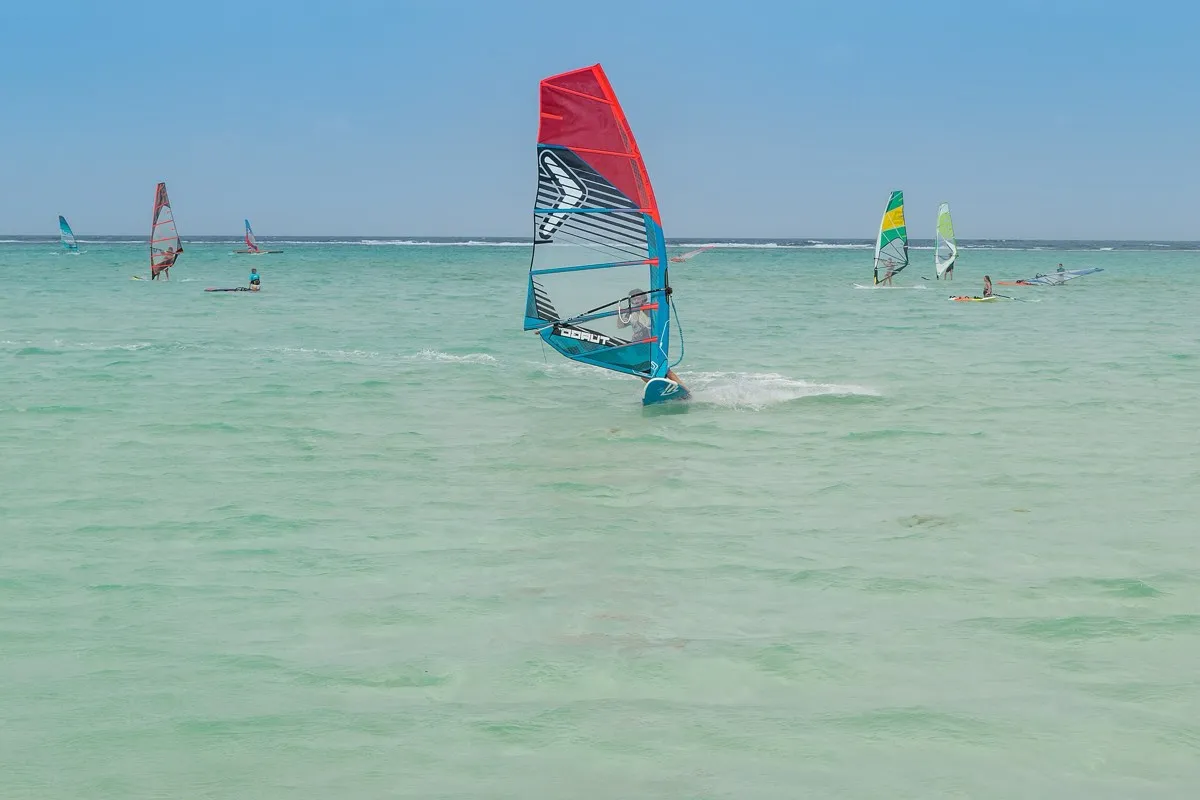
| Coordinates | ~12.10°N, 68.23°W (Sorobon, SE Bonaire) |
| Wind | E/NE trade, 15-25 kt, most reliable 11am-5pm, 90%+ windy days |
| Water | 700-ha reef lagoon, 0.7-1.2 m deep (avg ~80 cm), 27-28°C, flat 90%+ of year |
| Relaunch room | Huge and contained; waist-deep sand, no swell, no boat traffic |
| Rescue | Trivial: stand-up recovery almost everywhere; contained lagoon |
| Rules | STINAPA bans kitesurfing (fines $100-500); winging/parawinging welcome |
| Level | Beginner to advanced (kids from ~9) |
Very little can go wrong at Lac Bay. That is the sales pitch, and it is why every other flat-water lagoon ends up measured against this one. The bay sits on the southeast corner of Bonaire at Sorobon (~12.10°N, 68.23°W), a 20-minute drive from Flamingo airport (BON), which takes direct flights from Amsterdam and Miami. A flat-water spot in the truest sense: a 700-hectare shallow lagoon sealed off from the open sea by a barrier reef, turquoise over white sand, flat more than 90% of the year.
Wind and water
The trade blows E/NE at 15-25 kt, stronger through winter and spring, and it is synoptic rather than thermal. No waiting for the land to heat up. Spot guides report 90%+ windy days; Bonaire.com counts 300 windy days a year. Most reliable window runs from about 11am to 5pm. That reliability is what you are paying for. You don’t gamble a travel week on a lake that might go glassy, and if you’re weighing a steady trade-wind lagoon against a thermal lake, this is exactly the profile the spot finder points learners toward.
Then the water. Depth runs roughly 0.7-1.2 m, averaging around 80 cm: waist-deep almost everywhere (Go-Wingfoil). Temperature holds at 27-28°C year-round; the wetsuit stays home. Higher salinity in the enclosed bay buys a touch of extra buoyancy. The lagoon is also an internationally recognised Ramsar wetland with roughly 100 hectares of mangroves, which explains a lot about the rules below.
Near-perfect for parawing, with one catch
A parawing’s core hazard: a stashed or dropped wing is invisible on the water and can drift away from you faster than you can swim. Lac Bay defuses almost all of that. The reef keeps you in the lagoon. No boat traffic means nothing to run over a floating wing or a downed rider. Best of all, you can stand up over most of the bay, so a botched deploy or a tangled stash is a walk back, not an emergency. None of which excuses skipping fundamentals: drilling your self-rescue and drift is still the habit that keeps you safe once you graduate to real open water. But as a place to build those reps, it’s hard to beat.
The catch is depth. Some inner sections near shore are too shallow to clear a full foil mast, and a 75-95 cm mast will strike bottom there at low tide. The fix is simple: ride the deeper zones toward the reef and favour mid-to-high tide. Scout the bottom on your first session before you commit to a long mast.
Know the kite ban before you rig
Kitesurfing is banned in Lac Bay. Per Bonaire.com, STINAPA (the island’s nature-management foundation) prohibits it “due to safety regulations,” with fines from $100 to $500, to protect the shallow water and the mangroves. Kiting gets pushed to Atlantis Beach instead. For parawingers this is pure upside: no kite lines crossing the lagoon means calmer, less-contested water. Winging, windsurfing and parawinging are all explicitly welcome. Rules like this evolve, though, so confirm the current STINAPA position locally before your first session.
Infrastructure and logistics
The beach is well served. The Frans Paradise, Bonaire Windsurf Place, Jibe City and the Dunkerbeck Pro Center all offer wing lessons, rental (Duotone, Fanatic, GA) and gear storage right at the water (Sportif Travel). None of them stock parawing-specific kit yet, so bring your own; the parawings hub covers what packs well for travel. Stay at Sorobon Beach Resort right on the bay, or rent an apartment in Kralendijk with a car (Totalwing). Bonaire is also world-class for shore diving, which makes the trip an easy sell to a mixed group.
Verdict
This is the flat-water sanctuary you send a new parawinger to. Steady 15-25 kt trade, waist-deep flat water, no boats, no kites, stand-up rescue anywhere. The only real limitation is the shallow inner lagoon and your own mast length. Still on the basics of the discipline? Start with what parawing foiling is, then come here to put it on the water. The deeper reef-side zone carries the depth you want; scout it and add your own depth notes before committing a long mast.
FAQ
Is Lac Bay good for learning to parawing?
Hard to name a better flat-water learning lagoon anywhere. The water is waist-deep sand (average ~80 cm), flat over 90% of the year, and warm at 27-28°C, so after a mistake you stand up and reset instead of swimming. Four wing schools operate on the beach for lessons and rental.
Can you kitesurf at Lac Bay?
No. STINAPA (the island's nature-management foundation) prohibits kitesurfing in Lac Bay for safety and to protect the shallow water and mangroves, with fines from $100 to $500. Kiting is only permitted at Atlantis Beach. Winging, windsurfing and parawinging are all welcome in the lagoon.
How deep is Lac Bay and will my foil mast hit bottom?
The lagoon runs roughly 0.7-1.2 m deep, averaging about 80 cm. Inner areas near shore are too shallow to clear a full mast, so ride the deeper sections toward the reef and favour mid-to-high tide if you run a long mast.
When is the windy season at Lac Bay?
The E/NE trade blows most reliably December through August, strongest in winter and spring, with 90%+ windy days. Wind typically fills through the middle of the day and is most consistent from about 11am to 5pm.