Lake Garda, Italy
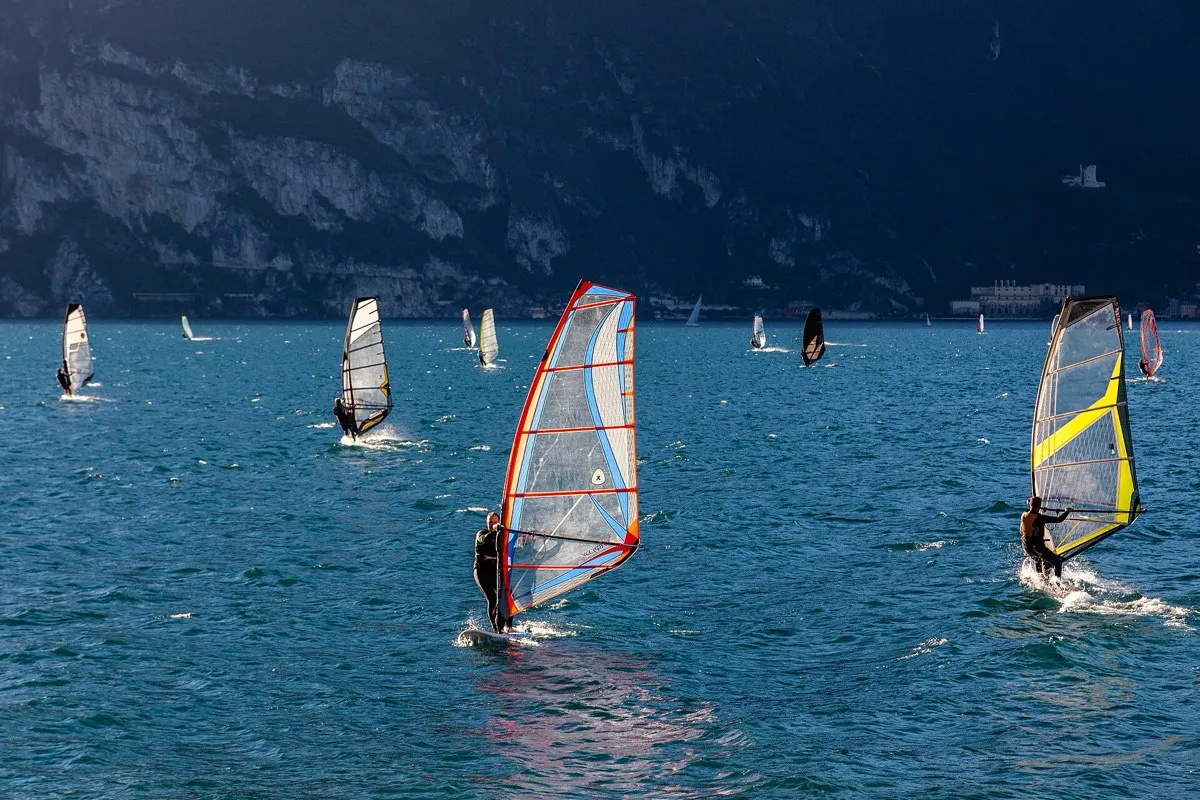
| Coordinates | 45.87°N, 10.87°E (Torbole) |
| Wind | Peler (N) ~20 kt early AM, flat; Ora (S) 12–20+ kt from midday, choppier — purely thermal |
| Water | Deep freshwater, no tide; flat on morning Peler, chop on afternoon Ora; 18–24°C summer, wetsuit needed |
| Rescue | Dense school infrastructure with boat support (Duotone Pro Center, Surf Segnana, Circolo Surf, Conca d'Oro) |
| Rules | Life-jacket/harness flotation mandatory and enforced by police boat patrols; stay in marked windsport zones |
| Level | Beginner-friendly on the morning Peler; afternoon Ora better for intermediate+ |
Is Lake Garda a parawing spot?
The morning Peler wind at Torbole and Navene on the north end of Lake Garda gives genuinely flat freshwater and a dense cluster of foil schools, which makes it a plausible parawing learning venue. But the flatness is a morning-only window — the afternoon Ora builds the well-known Garda chop — and documented parawing riding here is not on record. The read below is inferred from the lake’s established wingfoil use, not from proven parawing sessions.
Wind: two thermal winds, forecast poorly
Garda runs on thermals, not fronts, which is the single most important thing to understand before you travel. The Peler blows from the north in the early morning — starting roughly 7–9am — at around 20 kt, and at the Torbole/north end it is described as “milder and super flat.” That is the flat-water window. The Ora fills from the south around noon to 1pm, April through September, building from 12 to 20+ kt but choppier as it goes.
Because both winds are purely thermal, standard forecast apps predict them poorly. Meeting times at the schools reflect this: riders gather around 7:30am for the Peler and 1pm for the Ora.
Water and flat-water potential
The lake is deep freshwater with no tide. Morning Peler at Torbole and Navene is genuinely flat; the afternoon Ora develops the Garda chop the spot is known for. Summer water sits at 18–24°C, so a wetsuit is needed. For flat-water glide practice and early upwind work, the Peler window is the one to target.
Hazards and rules
Ferries and sailing-school boats are the main hazard, and a stashed parawing is effectively invisible to them — stay inside the marked windsport zones. Flotation (life-jacket or harness) is legally required and enforced: police patrol by boat and fine riders without it. Practising your self-rescue and drift before you rely on the morning wind is sensible on a lake where the thermal can switch off.
Infrastructure
Garda’s density is a real asset — Duotone Pro Center Torbole, Surf Segnana, Circolo Surf Torbole and Conca d’Oro all teach wingfoil with boat support, with ample rigging meadows at Conca d’Oro and pebble beaches. Torbole itself is a walk-to-water windsurf town with lakeside campgrounds and hotels, and climbing and biking fill the no-wind days.
Compare conditions with other flat-water spots or use the spot finder to match Garda’s morning window to your level.
FAQ
Is Lake Garda flat enough for parawing foiling?
Only in a window. The morning Peler at Torbole and Navene is described as milder and super flat, ideal for flat-water learning. The afternoon Ora develops the well-known Garda chop, so plan sessions around the early wind.
When does the wind blow on Lake Garda?
Two thermal winds. The Peler blows from the north early morning, roughly 7–9am, near 20 kt. The Ora fills from the south around noon to 1pm, April–September, building 12 to 20+ kt. Both are thermal, so standard forecast apps predict them poorly.
Do I need flotation to ride at Lake Garda?
Yes. A life-jacket or harness flotation is legally mandatory and enforced — police patrol by boat and fine riders without it.
Has parawing riding actually been documented at Garda?
Not in the sources reviewed. Garda is a proven wingfoil venue; the parawing assessment here is inferred from that record, not from documented parawing sessions.