Sotavento, Spain
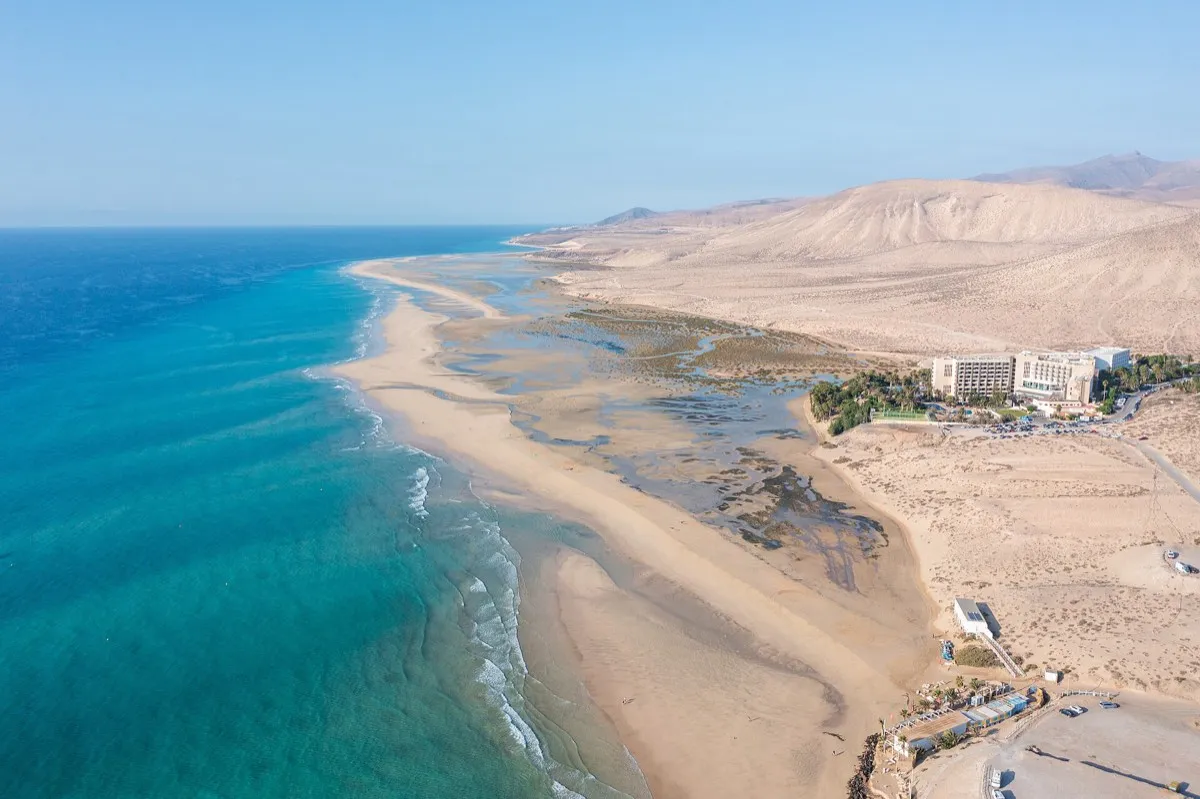
| Coordinates | ~28.09°N, 14.29°W: SE coast near Costa Calma/Morro Jable; FUE airport ~1 hr |
| Wind | N/NE trades 15–35 kt Apr–Sep, thermally accelerated by the hills; summer afternoons in the island's south regularly hit 40 kt (Wind-Hounds) |
| Water | Tidal lagoon, knee-to-chest deep at high tide; drains at low tide when the sandbar emerges; open ocean side is choppy and wavy |
| Relaunch room | Standing depth across most of the lagoon at high tide, so you can walk out of trouble; no room at low tide, the lagoon empties |
| Rescue | René Egli center (one of the world's largest windsurf/wing/kite centers) plus Risco del Paso; rescue cover on the lagoon |
| Rules | School zones (beginner/freestyle/downwind) marked in the lagoon; check the tide schedule before launching; World Cup event held here in July |
| Level | Lagoon: beginner/intermediate; ocean side: advanced only |
Every parawinger hits the same wall after a first season: you want flat-water hours, and you do not want to fly halfway around the planet to get them. Sotavento is the European answer. The lagoon sits on Fuerteventura’s SE coast near Costa Calma, about an hour from FUE airport, and at high tide it becomes a knee-to-chest-deep pool about as forgiving as parawing terrain gets. Two variables run this spot: tide and gust. Nail both and it is a progression machine. Miss either and you are standing on a drained sandbar or getting pushed toward the choppy ocean side.
Why parawingers come here
Standing depth changes the cost of every mistake. Collapse your parawing in the lagoon at high tide and you stand up, untangle, redeploy. No treading water. No long swim. Few places in Europe are better for drilling stashing mid-ride until it goes automatic, because a botched stash costs you a walk, not a rescue. The René Egli center, one of the world’s largest windsurf/wing/kite operations, plus Risco del Paso cover lessons, gear and rescue, so nobody drills alone here.
Against the other big European flat-water names in the spots index: Sotavento gives up Leucate’s drive-to convenience and pays it back with stronger, more reliable summer wind, and it is far more sheltered than Tarifa’s open beaches. As long as you stay inside the lagoon, that is.
What actually blows
N/NE trade, thermally accelerated by the hills behind the coast (Wind-Hounds). Count on 15–35 kt through the April–September season; Wind-Hounds lists April–September as the windiest window. Two numbers matter when you pack:
- 20–30 kt is the lighter range the island’s north around Corralejo sees (Wind-Hounds).
- 40 kt is what the island’s south at Sotavento can regularly hit on summer afternoons (Wind-Hounds).
Long-term monthly distributions live on Windfinder’s Sotavento statistics page. Check them against your smallest parawing before booking, and work through gust management first. The thermal acceleration is not smooth. Then there is the direction problem. The north wind is side-off on the lagoon. Side-off over flat water feels great right up until something breaks, and then the drift carries you toward the ocean side: chop, waves, gusty offshore wind. That is the main hazard here, and the reason the rescue boat matters even at a “beginner” spot.
The tide game
The lagoon is tidal, and the tide decides whether a session exists at all. At high tide it fills to knee-to-chest depth and turns into one of the flattest, most protected riding areas in Europe; Wind-Hounds describes it as a vast, protected tidal training lagoon that is “not always deep enough” to ride. At low tide the sandbar emerges, the water drains out, nothing to ride. Plan around mid-to-high tide and check the tide schedule before every launch; the centers post it.
| Tide | Lagoon state | Parawing call |
|---|---|---|
| High / mid-rising | Filled, knee-to-chest deep | Ride: flattest window, standing-depth safety |
| Mid-falling | Draining | Finish the session, don’t start one |
| Low | Sandbar emerged, lagoon empty | No riding; ocean side is advanced-only |
Zones, rules, crowds
The lagoon runs on structure. School zones are marked out for beginner, freestyle and downwind areas, so expect organization rather than free-for-all, and expect traffic in July when the World Cup event runs here. The ocean side has neither the structure nor the protection. Know the trade-off going in: this is a busy, commercial spot in peak season, and the tidal window compresses everyone into the same hours. If you want empty water, this is not it.
Logistics
Paradisus by Meliá Fuerteventura (the former Meliá Gorriones) and Sol Beach House sit about 200 m from the center, with Costa Calma’s restaurants a short taxi away (Waverick’s Fuerteventura guide covers the wider island). Fly into FUE, roughly an hour’s transfer. Season is April–September. Peak wind is the summer months, when afternoons on the south side go nuclear. If you are on bigger gear, ride the lagoon in the morning.
FAQ
Is Sotavento lagoon good for parawing beginners?
At mid-to-high tide, yes. It is one of the flattest, most protected training areas in Europe, knee-to-chest deep, with marked school zones and rescue from the René Egli center. At low tide the lagoon drains and there is nothing to ride, and the ocean side is advanced-only.
How windy is Sotavento in summer?
N/NE trades run 15–35 kt through April–September, accelerated thermally by the island's hills. The south side regularly hits 40 kt on summer afternoons, so bring your smallest parawing and check Windfinder statistics before booking.
Does the tide matter at Sotavento?
Completely. The lagoon only fills at high tide; at low tide the sandbar emerges and the water drains out. Check the tide schedule before every session and plan around mid-to-high tide.
Can you ride the ocean side at Sotavento?
Only if you are advanced. The open ocean side is choppy, wavy and the wind is gusty and can be offshore. For parawing, staying in the lagoon with rescue cover nearby is the sane call.