Hua Hin, Thailand
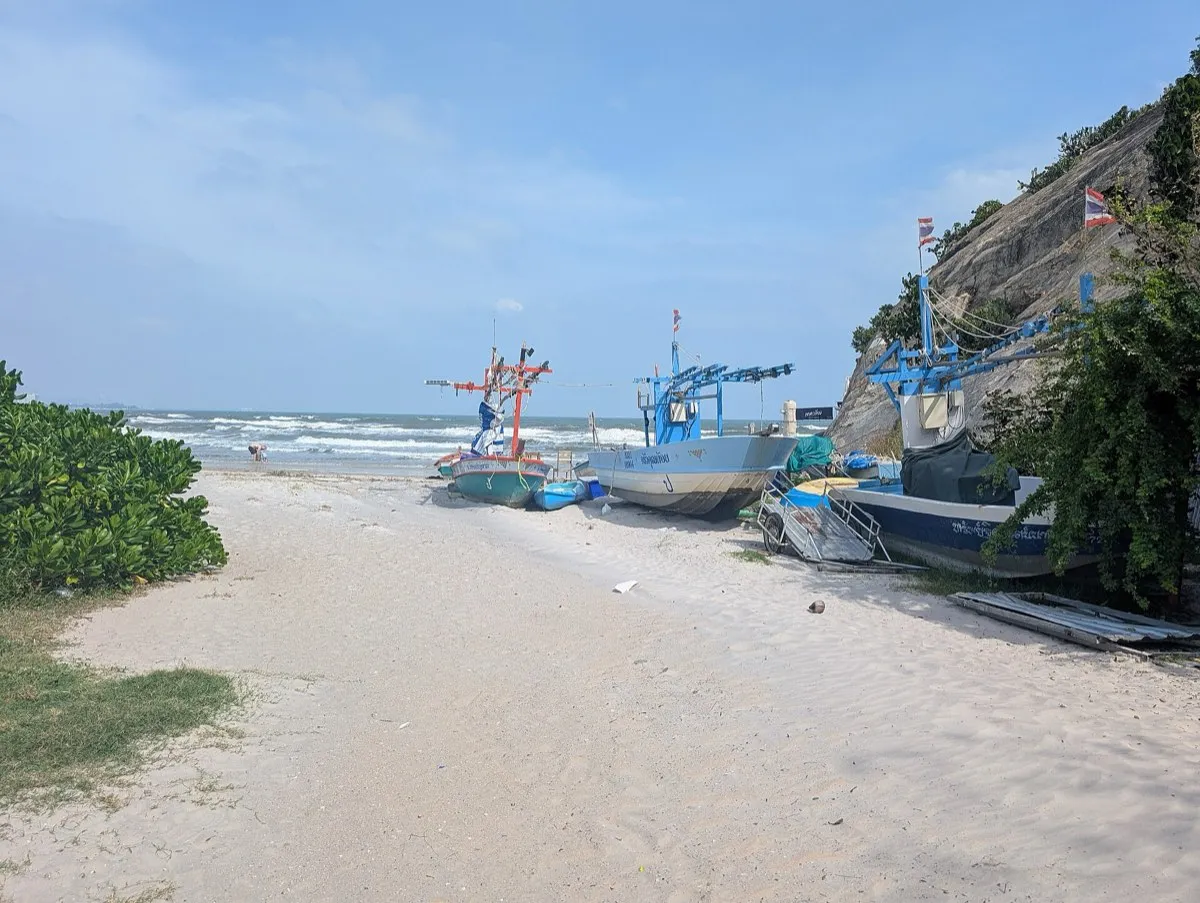
| Coordinates | 12.57°N, 99.96°E |
| Wind | NE/S monsoon, side-onshore, 10–20 kt |
| Water | Flat sections + small waves, warm 27–30°C; choppier than Pranburi |
| Rescue | Boat traffic in the bay is the hazard |
| Rules | No formal permit; lessons late-morning to afternoon |
| Level | Beginner–intermediate |
The short version
Hua Hin sits in Prachuap Khiri Khan on Thailand’s gulf coast, about 2.5–3.5 hours south of Bangkok. It is an established resort town with a wide sandy beach, light side-onshore wind and warm water — the kind of easy, low-consequence base people use to learn to foil. The wind is monsoon-driven, 10–20 kt, running roughly November through May.
One thing to be straight about: no documented parawing sessions here are on record. The read below is inferred from the spot’s kite and wing record — Kiteboarding Asia runs wing rental and lessons on this beach — not from proven parawing riding. Take it as an informed assessment of a learning venue, not a verified parawing spot.
Wind and season
Hua Hin runs on two monsoon phases. The NE monsoon is strongest from November to January; then the wind swings to the south from February into June, with thermal-boosted afternoons. Across the season it is generally 10–20 kt and side-onshore. Note that wind figures vary by source — Hua Hin is cited as both 14–16 kt and 10–20 kt in the research — so confirm live with local webcams or the schools before committing to a size. For a 10–20 kt window, run the parawing size calculator.
Water and hazards
The bay has flat sections plus small waves, but it is choppier than nearby Pranburi because it is an open bay with boat traffic. Water is warm, 27–30°C, so wetsuit needs are minimal. For a parawing, the flat sections and light wind genuinely suit foil learning — the honest hazard is the boat traffic in the bay, which is exactly what you do not want overhead when you are stashing and deploying a wing. Read self-rescue and drift before you plan on swimming a dropped wing back through a busy bay.
Two more practical catches: the tide erases the beach launch at high tide from November to March, so time your session to the tide, and jellyfish show up in March–May and again in November.
Where to base and what’s nearby
Logistics are easy — it is a well-known resort town, straightforward to reach from Bangkok (fly into Hua Hin/HHQ or Bangkok/BKK/DMK). Kiteboarding Asia runs three centers here and Kite Thailand offers kite, wing and SUP. There is no formal permit, and lessons run late-morning to afternoon.
If you want flatter, cleaner water, Pranburi (Pak Nam Pran) about 30 km south is the quieter, slightly windier alternative — better flat-water foiling, fewer crowds, best at mid-low tide near the river mouth. Compare options on the flat-water spots hub or match seasons with the spot finder.
If you ride a parawing at Hua Hin, send your session notes — first-hand reports are what move this from analysis to documented.
FAQ
Is Hua Hin good for parawing?
It is a plausible beginner-to-intermediate foil venue: flat sections, light side-onshore wind and warm water suit foil learning. But documented parawing use is not established — this is inferred from kite and wing records — and the bay is choppier than nearby Pranburi.
When is the wind season?
Roughly November to May. The NE monsoon blows strongest November to January, then S winds with thermal-boosted afternoons take over from February into June, generally 10–20 kt and side-onshore.
What are the hazards?
Boat traffic in the bay is the main concern for a stashed wing. The tide erases the beach launch at high tide from November to March, and jellyfish appear in March–May and November.
Is there a flatter alternative nearby?
Yes — Pranburi (Pak Nam Pran), about 30 km south, is flatter, quieter and 1–3 kt windier, especially near the river mouth at mid-low tide.