Matheson Hammock, USA
| Coordinates | 25.68°N, 80.26°W (Coral Gables, Biscayne Bay) |
| Wind | E trade, 18–22 kt, most consistent Nov–April |
| Water | Shallow flat — waist-to-chest deep, soft bottom, minimal chop |
| Relaunch room | Contained bay, onshore-ish wind, low boat traffic in the flats |
| Rescue | Miami Kiting operates on site (kite/wing/e-foil) |
| Rules | Miami beaches regulate kiting — check posted signs at Matheson |
| Level | Beginner–intermediate |
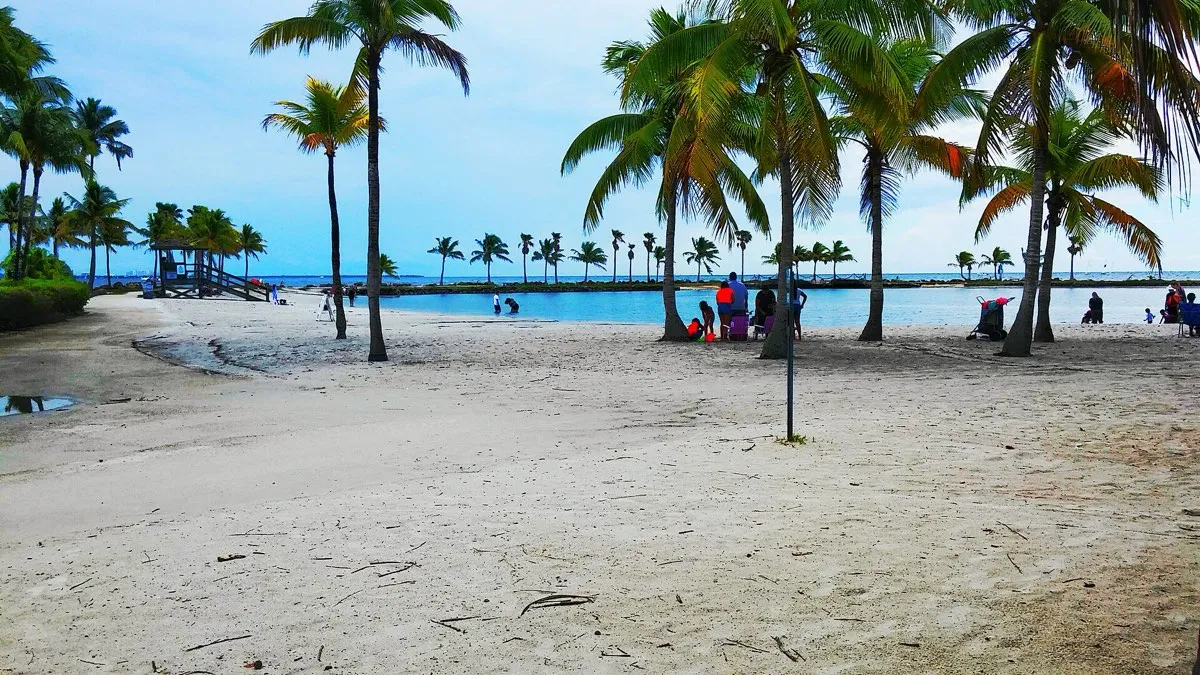
Matheson Hammock, in Coral Gables on the western shore of Biscayne Bay, is the most forgiving flat water in Miami. It is a shallow training ground — waist-to-chest deep over a soft bottom, with minimal chop and a contained bay that keeps you from drifting into open water. On the winter E trades it can hold 18–22 kt for days at a time. Everything about the venue reads as friendly parawing terrain. What it does not yet have is a documented parawing track record.
Is Matheson Hammock actually a parawing spot?
Be honest about what we know. The records here are from wing foiling and kiteboarding — Miami Kiting runs kite, wing and e-foil sessions from the site, and the flats are a well-known local learner venue. No published parawing session confirms the spot for a stashed wing specifically. The assessment below is inferred from those wing and kite records at the same break, not from proven parawing riding. If you ride it, you are effectively pioneering it.
That said, the ingredients that matter for a parawing line up well. A stashed wing is invisible and useless as a rescue signal, so contained, low-traffic water is exactly what you want — and the Matheson flats deliver both, over a soft bottom kinder than the reef elsewhere in South Florida.
Wind and season
The E trade winds are the engine here, most consistent from November through April. This is a winter warm-water escape, not a summer spot — summer goes light and unreliable. Because the wind is roughly onshore-ish into a contained bay, a failed self-rescue drifts you toward shore rather than out to sea, which matters more with a parawing than with a kite you can see.
Water and hazards
The flats are shallow. That is the appeal for early flat-water work, but it is also the main limiter: some areas are too shallow at low tide to clear a full foil mast. Plan around the tide, riding mid-to-high water when you want clearance. Boat traffic in the flats is low, but Biscayne Bay is a busy metro waterway overall, so stay in the shallow training zone.
Rules
Many Miami beaches strictly regulate kiting; check the posted signs at Matheson before you rig, since parawing use falls under the same local scrutiny. Nearby Crandon Park on Key Biscayne is a separate venue that requires a daily pass.
Before you go
Matheson is a strong candidate for winter flat-water progression, but ride it as an unproven parawing spot. Use the spot finder to compare it against documented flat-water venues, and size conservatively with the parawing size calculator for the 18–22 kt trade range.
FAQ
Is Matheson Hammock good for parawing foiling?
On paper, yes — it is Miami's most forgiving flat water, shallow and contained. But no documented parawing sessions exist yet, so this is an inference from wing and kite use rather than proven parawing riding.
When is the wind best at Matheson Hammock?
The E trades are most consistent from November through April, often holding 18–22 kt for days at a time. Summer is lighter and less reliable.
Is the water deep enough to foil?
The flats are waist-to-chest deep with a soft bottom, fine for learning, but some areas go too shallow at low tide to clear a full mast. Ride mid-to-high tide when you want mast clearance.
Are there rules or permits at Matheson Hammock?
Many Miami beaches strictly regulate kiting, so check the posted signs at Matheson before rigging. Nearby Crandon Park requires a daily pass.