Guincho, Portugal
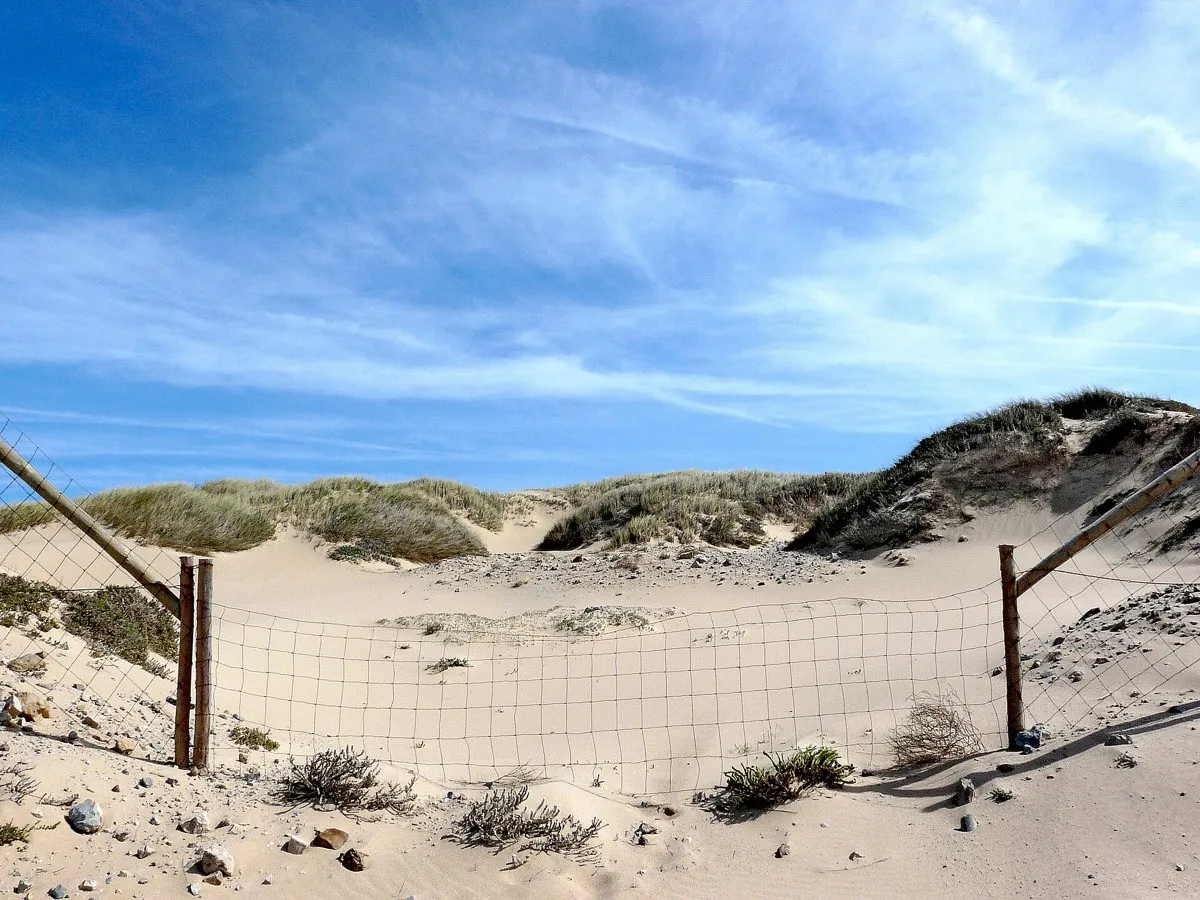
| Coordinates | ~38.73 N, 9.47 W (Cascais) |
| Wind | Thermal Nortada WNW-NW, cross-on to cross-shore; builds through the day, often Force 7 by afternoon |
| Water | Beach break, ~1.0-1.5 m on calmer days; punchy |
| Rescue | No formal patrol noted; cross-on wind drifts a downed rider shoreward, but onto rocks and shorebreak at the flanks |
| Level | Expert (gusty wind, rocks, heavy high-tide shorebreak) |
Guincho, on the Atlantic coast just north of Cascais, is one of Europe’s best-known summer wave-wind venues. The engine is the Nortada, a thermally reinforced northerly that here blows WNW-NW - cross-on to cross-shore from the right - and builds through the day, often reaching Force 7 by afternoon (Kite and Windsurfing Guide). The beach break averages 1.0-1.5 m on calmer days. Decades of windsurfing and, more recently, wing and kite sessions have proven the wind. What has not been proven is the parawing.
No documented parawing use. This profile is an assessment, not a session report. There are no recorded parawing sessions at Guincho that we can cite. The suitability read below is inferred entirely from the spot’s established wind-sports record - windsurf, wing and kite - and the published wind and wave data. Do not read it as evidence that anyone has ridden a parawing here.
Why the wind geometry is promising
A cross-on to cross-shore wind is the friendly case for wave riding: waves do not break straight top-to-bottom against you, and the onshore component means a downed rider tends to drift toward the beach rather than out to sea. For the stash-and-surf loop that parawing wave riding depends on, that direction matters. The Nortada also delivers reliable summer wind, which is why the venue has a windsurf pedigree at all.
Why it still rates expert
The same Nortada is gusty and accelerates through the day to Force 7. Rocks flank the beach, and the shorebreak turns heavy at high tide - so the shoreward drift that helps you in principle can put you onto rock or into a slamming inside section. Managing an invisible, stashed parawing in gusty Force-7 gusts next to rocks is exactly the scenario that makes a spot expert-only. Size conservatively against the top of the wind range, not the bottom - the size calculator is worth running before you rig.
If you go
Come with a solid self-rescue and drift plan, treat any first parawing attempt as exploratory, and carry rescue cover - there is no formal patrol noted. Guincho is best May to September, when the thermal is most reliable; spring and autumn bring bigger swell but far less wind. Weigh it against gentler wave options in the waves directory before committing.
FAQ
Is Guincho suitable for parawing foiling?
On paper, yes for experts, but there is no documented parawing riding at Guincho. The read is inferred from its long windsurf and wing history: a cross-on to cross-shore Nortada over a wave beach is the right wind geometry, but the gusts, flanking rocks and heavy shorebreak push it to expert-only.
When does the wind blow at Guincho?
The Nortada is a summer thermal, strongest May to September. It is light in the morning and builds through the day, often reaching Force 7 by afternoon. Spring and autumn bring bigger swell but wind only about half the time.
What are the main hazards at Guincho?
Gusty, accelerating wind, rocks flanking the beach, and a heavy shorebreak at high tide. These are what make it expert terrain and a demanding place to manage a stashed parawing if you come off the foil.