Valdevaqueros, Spain
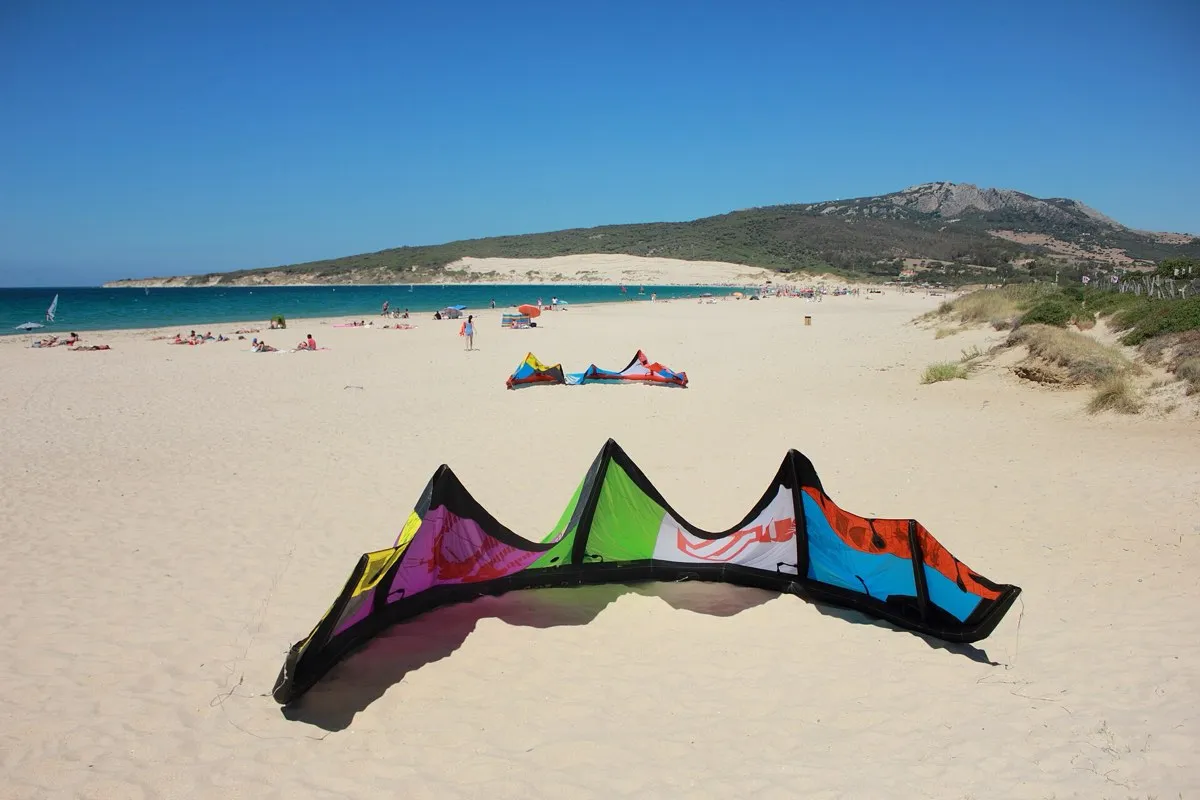
| Coordinates | ~36.07 N, 5.70 W (Valdevaqueros) |
| Wind | Poniente (W) side-onshore ~40% of the time, 12-22 kt; Levante (E) side-offshore, strong; 300+ days/yr over 15 kt |
| Water | Small rolling waves on Poniente; flattened by Levante; bonus right point at Benavides/Punta Paloma on Poniente swell |
| Rescue | Dune at Valdevaqueros gives a shore safety zone; offshore Levante makes self-rescue hard |
| Level | Advanced (crowds, and offshore Levante days) |
Valdevaqueros sits at the heart of Tarifa, Europe’s wind capital, which logs over 300 days a year above 15 knots (Matos-Tarifa). Wind is never the question here; direction is. Two regimes define the spot. The Poniente is a west wind, present about 40% of the time, averaging 12-22 knots and side-onshore - it builds small rolling waves ideal for a wave workflow. The Levante is an east wind, strong and side-offshore, which flattens the sea and blows riders out (Kitefun Tarifa).
No documented parawing use. This is an assessment, not a session report. There are no recorded parawing sessions at Valdevaqueros for us to cite. The read below is inferred from Tarifa’s dense, well-documented wing and kite scene and the published wind data - not from anyone having ridden a parawing here.
Ride the Poniente, not the Levante
On a Poniente day the geometry is about as friendly as European wave parawinging gets: side-onshore wind, small rolling waves, and a sand dune at Valdevaqueros that provides a shore safety zone even when things go wrong. Side-onshore wind drifts a downed rider toward the beach, and on Poniente swell days a long right point at Benavides/Punta Paloma is reachable in a short ride (Alex Pastor Kite Club). That is the day to try a parawing here.
The Levante is the opposite case. Side-offshore and strong, it flattens the waves and, more importantly, blows a downed rider out to sea. An invisible, stashed parawing in an offshore gale is the exact scenario self-rescue and drift planning exists to prevent. Do not treat Levante as a parawing wave day.
Crowds and level
Rate it advanced. Valdevaqueros is the busiest wing spot in Tarifa, and the GWA Wingfoil World Cup is planned to return here in 2026 (Wingfoil World Tour) - a low-sitting rider with a stashed wing is hard to see in that traffic. The season runs April to October. Size against the wind you actually get with the size calculator, and compare Valdevaqueros with the rest of the waves directory before you build a trip around it.
FAQ
Is Valdevaqueros suitable for parawing foiling?
On Poniente days it reads as an excellent advanced venue - side-onshore wind, small rolling waves, and a sand dune that provides a shore safety zone. But there is no documented parawing riding here; the assessment is inferred from Tarifa's dense wing and kite record. On Levante the wind is side-offshore and it is not a safe parawing wave day.
What is the difference between Poniente and Levante at Tarifa?
Poniente is a west wind, side-onshore, present about 40% of the time and averaging 12-22 knots - it builds small rolling waves and drifts a downed rider shoreward. Levante is an east wind, strong and side-offshore, which flattens the sea and blows you out; it is the dangerous regime for anyone managing a stashed parawing.
When is the season at Valdevaqueros?
April to October is the main window. Tarifa logs over 300 days a year above 15 knots, so wind reliability is exceptional; the deciding factor for a parawing wave session is which regime is blowing, not whether there is wind.
Is Valdevaqueros crowded?
Yes - it is the busiest wing spot in Tarifa, which is itself Europe's densest wind-sports town, and the GWA Wingfoil World Cup is planned to return here in 2026. A low-sitting rider with an invisible stashed parawing is hard to see in that traffic, so ride defensively.