Kanaha, United States
| Coordinates | 20.905, -156.435 (Kanaha Beach Park) |
| Wind | 15–30 kt NE trades, side/side-on |
| Water | Reef and outer-reef waves, rolling and foil-friendly |
| Relaunch room | Excellent — channels between reefs, large forgiving launch |
| Rules | Shared with wings, kites and foilers; right-of-way discipline essential |
| Level | Advanced |
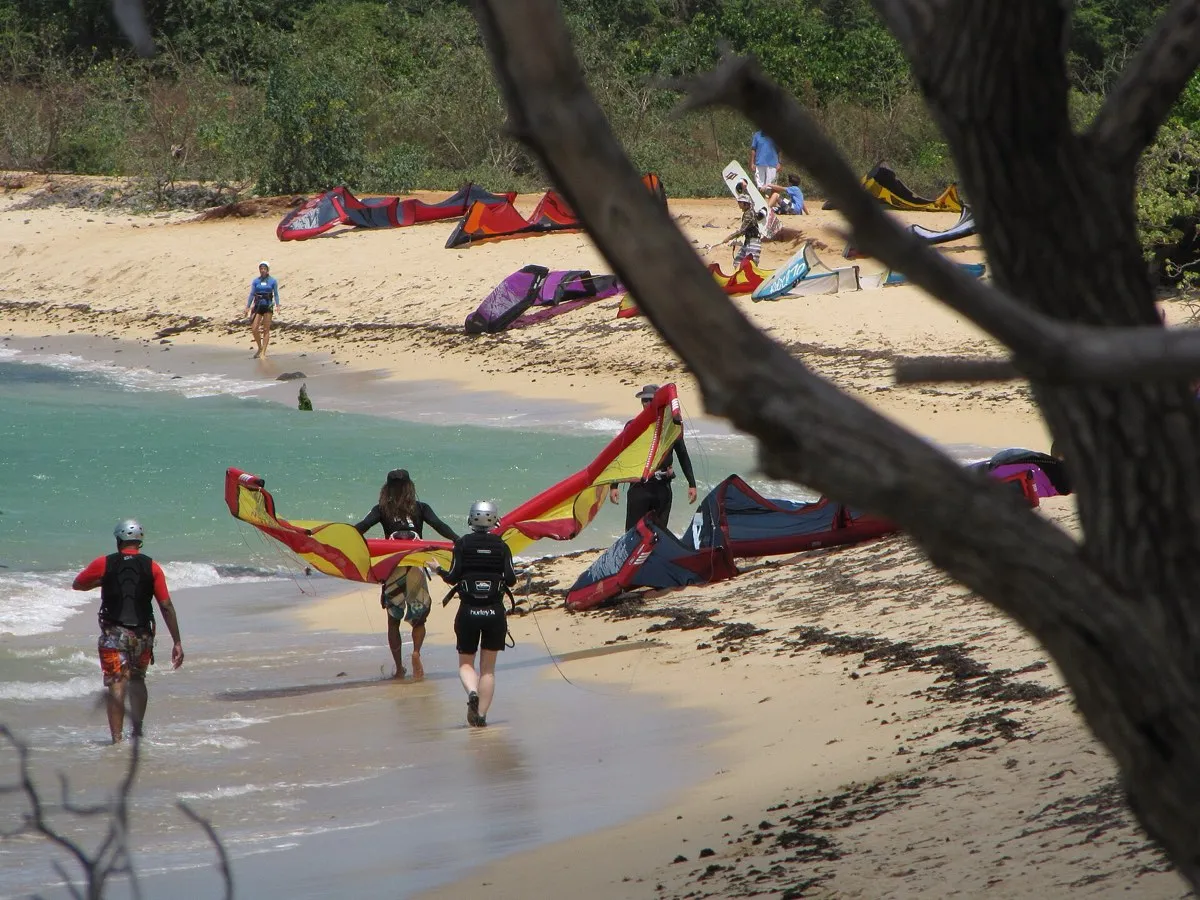
Kanaha / Kā’a Point, at Kanaha Beach Park in Kahului, Maui, is where the sport started and where it still lives. This is the birthplace and global home of parawinging, and — uniquely — the one place you can learn wave parawinging from parawing-specific instructors rather than by adapting wing or kite technique on your own. Kite HI runs parawing clinics directly at Kā’a Point, with intro sessions starting at $350 for two hours and demos in Kahului; Boardriding Maui (BRM), an actual parawing manufacturer, is based on-island. If you are serious about riding waves with a parawing, any trip should anchor here.
Why it works so well
The conditions are almost purpose-built for the stash-and-surf loop. Steady 15–30 kt northeast trade winds blow side to side-on — the angle you want for powering out, stashing the wing, surfing the wave hands-free and redeploying. The waves themselves are reef and outer-reef rollers: foil-friendly and forgiving rather than the shallow-reef power that makes spots like One Eye or Cloudbreak expert-plus terrain. Summer brings reliable swell; winter surf is heavier. The season for the steadiest wind is April through October.
Just as important for a new discipline is room to fail safely. Kanaha offers a large, forgiving launch and channels between the reefs to relaunch in — exactly what you need when a dropped wing and a foil leave you sorting yourself out in the water. This is why it grades advanced within a discipline where all wave riding is advanced, sitting alongside Cabarete and Big Bay rather than with the expert-plus power breaks like One Eye, Cloudbreak and Margaret River. Advanced here means the wind and waves are manageable; it does not mean beginner. All wave parawinging demands that you can already ride swell confidently on a foil before you add a wing you have to stash.
Documented, not inferred
Most of the wave spots in this directory are “suitable by analysis” — read off strong wingfoil, kite or prone-foil track records rather than published parawing sessions. Kanaha is different. It is genuinely documented parawing water: the clinics at Kā’a Point are parawing-specific, not wing lessons repurposed, and the on-island scene — Kite HI for instruction and demos, BRM as a resident manufacturer, plus Hi-Tech and Blue Planet nearby — is built around the sport rather than adjacent to it. When you are learning a discipline this young, the difference between “someone probably could” and “instructors teach it here every week” is the whole trip.
The one real hazard: everyone else
The waves are not the problem at Kanaha — the crowd is. This water hosts wingfoilers, kiters, prone foilers and now parawingers simultaneously, and a stashed wing plus a foil is a fast, quiet, unpredictable combination that other users will not anticipate. Right-of-way discipline is non-negotiable. Beyond traffic, mind the shallow reef sections against your mast length at low tide, and watch for Kahului-area boat traffic.
Where it fits in a Maui trip
Use Kanaha as your daily venue. Kite Beach, immediately downwind, is soft reef and beach waves on the same side-on trades — part of one continuous downwind and stash-and-surf playground. Once you can reliably power out, stash within a few seconds, surf a wave hands-free and redeploy in 15–25 kt side-shore wind, you are ready to venture to Paia Bay or the heavier Ho’okipa outer reefs — and ready to travel off-island. Drill the downwind glide and self-rescue and drift fundamentals here first; there is no better classroom. Compare it with other wave spots or filter by conditions in the spot finder.
FAQ
Can you actually learn wave parawinging at Kanaha?
Yes — this is the one place in the world with parawing-specific instruction. Kite HI runs parawing clinics directly at Kā'a Point, with intro sessions starting at $350 for two hours, plus demos in Kahului. Boardriding Maui (BRM), a parawing manufacturer, is also based on-island.
How hard is Kanaha for parawinging?
It grades advanced. The reef and outer-reef waves are rolling and foil-friendly rather than heavy, the launch is large and forgiving, and there are channels between reefs to relaunch in. The real difficulty is crowd management, not the surf itself.
When is the best wind?
April through October gives the steadiest 15–30 kt NE trades, blowing side to side-on. Summer brings reliable swell for the foil; winter surf is heavier.
What are the hazards?
Shallow reef sections — mind your mast length at low tide — and general Kahului-area boat traffic. The biggest one is the crowd: right-of-way discipline matters when wings, kites, foilers and parawings share the same water.