Port Beach, Australia
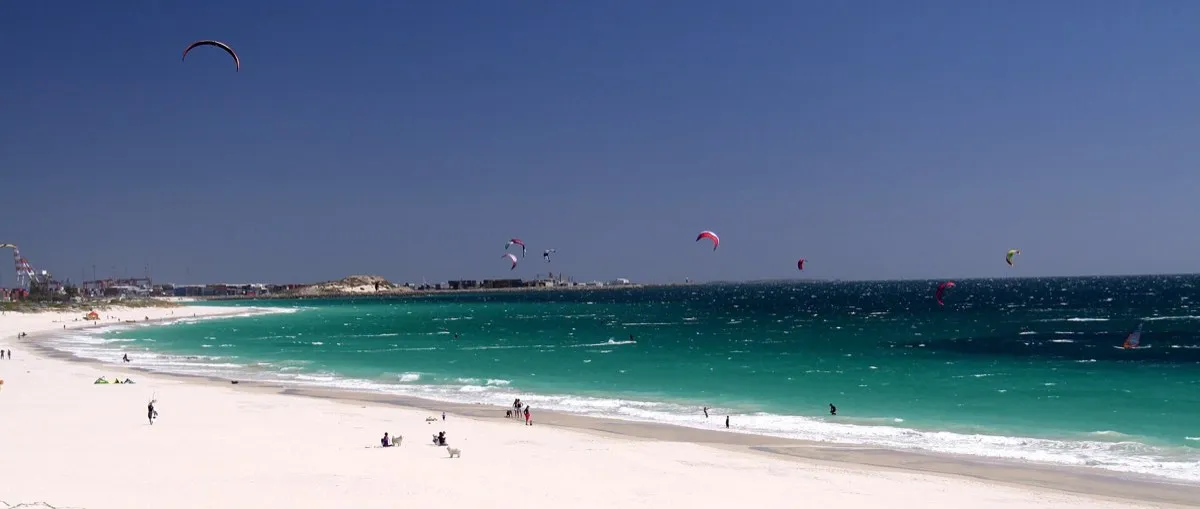
| Wind | SW 'Fremantle Doctor' sea breeze, ~15–25 kt (occ. 25–33 kt), fills midday |
| Rescue | No dedicated boat cover; strong self-rescue required |
| Rules | Sandy but sometimes heavy shore-dump exits; avoid crowded Scarborough finish on busy days |
| Level | Intermediate–Advanced |
What is the Port Beach run?
Port Beach is one of Perth’s shorter metro downwind runs — a 5–12 km line on the same coast that carries the 27 km Gage Roads flagship, but far less committing. Think City Beach down to Scarborough, or a quick Port Beach dash: enough distance to string bumps together and build sea legs without the exposure of a full metro descent. It’s rated intermediate–advanced.
Documented parawing use here is not established. The assessment below is inferred from prone, SUP, wing and kite downwind records on the same metro coast — treat it as suitable-by-analysis, not proven parawing riding.
Wind and season
The wind is the Fremantle Doctor, the SW sea breeze that fills almost every summer afternoon from November to March, usually around midday, at 15–25 kt (strongest December–January, occasionally 25–33 kt). It’s a clockwork breeze — you launch to the fill, not to a passing system — which is exactly why the shorter runs here are good learning terrain.
That range suits a mid-size parawing on most days. Check the forecast against your quiver with the parawing size calculator before you head out.
What to watch
- Shore-dump exits. The beach exits are sandy but the shore-dump can get heavy in swell — plan your finish.
- Crowds at Scarborough. If your line ends there, avoid the busy summer weekends and Thursday-night market evenings.
- No boat rescue. Even on a shorter run, there’s no dedicated safety vessel — keep your self-rescue automatic and stay within a distance you can swim in.
The parawing angle
For a rider stepping up from flat water to ocean bumps, a run like this is the logical bridge: consistent wind, manageable length, and easy car shuttling. If parawing riding establishes here, the relaunch canopy lets you redeploy and glide back toward shore rather than swim — a genuine advantage while you’re still dialing in the downwind glide. Until crews log actual parawing descents, it stays proxy data.
Ready for the long version on the same coast? See the Gage Roads 27 km flagship, browse the downwind spots hub, or match conditions to your level with the spot finder.
FAQ
How long is the Port Beach run?
It's one of the shorter Perth metro runs, roughly 5–12 km depending on put-in and takeout — for example City Beach down to Scarborough. It sits below the 27 km Gage Roads flagship as a step-up run.
Is Port Beach good for parawing foiling?
On analysis, yes — the reliable 15–25 kt Fremantle Doctor and shorter, less-committing fetch make it a sensible place to build sea legs on a mid-size parawing. But documented parawing descents here aren't established; the assessment comes from wing, SUP, prone and kite records on the same coast.
Is Port Beach beginner-friendly?
It's rated intermediate–advanced. It's shorter and less committing than Gage Roads, so the short dashes suit riders getting their sea legs, but it's still an open-ocean run with shore-dump and no dedicated boat rescue.
When does it work?
Summer afternoons, roughly November to March, when the Fremantle Doctor fills around midday. It's strongest December–January.