Blalock to Arlington, USA
| Wind | Thermal westerlies blowing against the river current, strong on summer afternoons; most summer days are a 3–4 m parawing day |
| Water | Cold freshwater with strong current, coldest in spring/early season from snowmelt; a wetsuit is normal |
| Relaunch room | ~9 mi (14.5 km) with NO road access between put-in and takeout; effectively no easy bailout once you commit |
| Rescue | No formal on-water rescue and no road access; strong self-rescue is required |
| Rules | Paid parking and passes apply at Gorge launches generally; remote put-in and takeout with no services between |
| Level | Expert / remote; the most committing run on the Gorge menu |
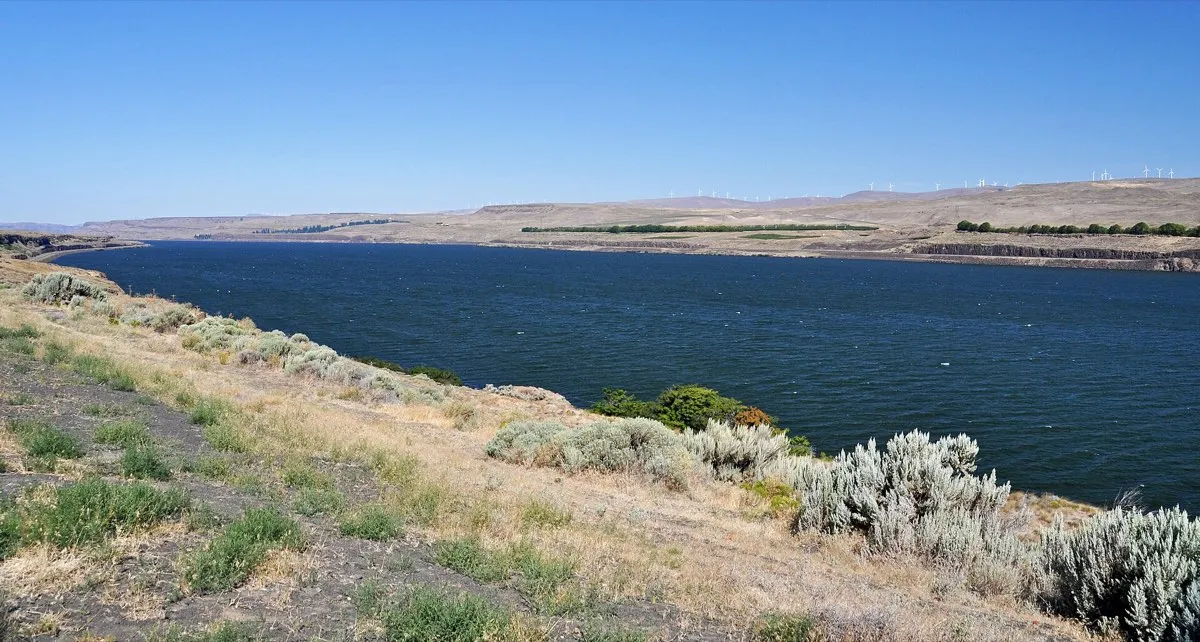
Blalock Canyon to Arlington is the run you graduate to, not the run you learn on. It is the remote, expert end of the Columbia Gorge menu: roughly 9 miles (14.5 km) down the Oregon side with no road access between put-in and takeout. Same bumps as the rest of the Gorge, none of the safety net. If the downwind hub is the Gorge’s welcome mat, this is the door at the far end marked experts only.
The same mechanism, no bailouts
The Gorge builds its bumps by blowing thermal westerlies against the river current: the opposing flow stacks the wind swell into tight, groomed bumps far bigger than the wind alone would make, strongest on summer afternoons from June through August. Most summer days are a 3–4 m parawing day. On the shuttle laps near Hood River, a mistake just means a swim to one of dozens of launches. Here, there are none. The defining feature of Blalock to Arlington is that once you commit, you are on your own for 14.5 km with no road to walk out to.
Why it is expert
Cold freshwater, coldest in spring and early season from snowmelt, and a strong current running against the wind, so every swim is longer than it looks. Add the isolation and the maths is simple: a failed relaunch, a broken part or a wind hole means you self-recover the entire remaining distance. The venue assumes you can already hold glide through the lulls, ride upwind on both tacks, and stash and redeploy without thinking. If any of those is still aspirational, this is not your run yet.
How to build up to it
Do not start here. The short Swell City to the Hatch laps and the classic Viento to Hood River line exist precisely so you can log the volume with easy bailouts before you take on a committing run. Treat Blalock to Arlington as the reward for making all of that automatic. Even then, go with people who know the exits, carry a leash, hydration pack and PFD as a personal minimum, and never run it solo. Browse the full spots directory for the lower-commitment Gorge runs to build on.
Gear and range
Small gear, but with a specific twist for a no-bailout run: range insurance matters more here than anywhere. Most days are a 3–4 m parawing day, and the wind drops and rebuilds mid-run, so a second size is not optional on a line where you cannot walk out if you get underpowered in a hole. Size your quiver with the parawing size calculator and pick a wing that redeploys cleanly from the parawings gear guide before you commit to the canyon.
FAQ
How long is the Blalock to Arlington run?
About 9 miles (14.5 km) along the Columbia River in Oregon. It is the longest and most remote run on the Gorge menu, sitting well above the classic 12 km Viento to Hood River line in commitment because of its lack of road access.
Why is Blalock to Arlington rated expert?
There is no road access between put-in and takeout, so once you launch you are committed for the full distance with no easy bailout. Combined with cold freshwater and strong current, that makes strong self-rescue a hard requirement, not a nice-to-have.
Should I parawing Blalock to Arlington to learn?
No. Build your skills on the short Swell City laps or the Viento line first. This run assumes you can already stash, redeploy and self-recover reliably, because a mistake mid-run leaves you a long way from any road.
What size parawing for the Gorge?
Most summer days here are a 3–4 m day, a small-gear, strong-wind venue. Carry a second size because the wind drops and rebuilds mid-run, which matters far more on a committing run with no bailout.