Jericoacoara, Brazil
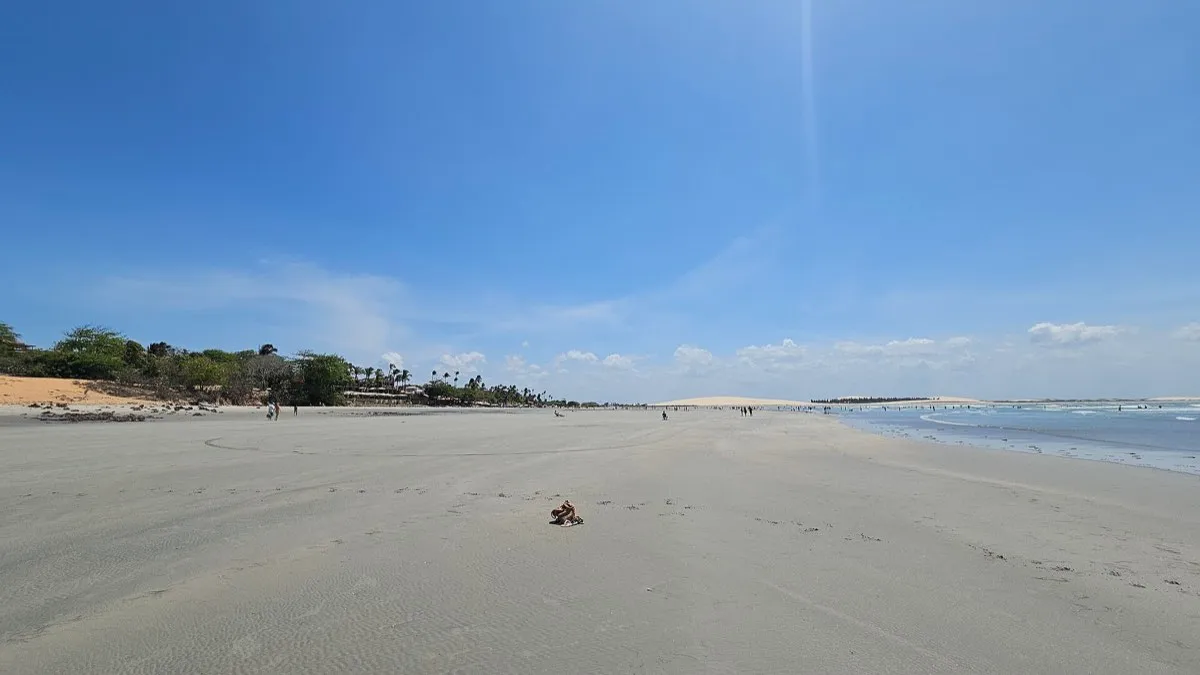
| Coordinates | 2.79°S, 40.51°W (Jeri) |
| Wind | E/SE trade, 20–25 kt (peaks ~35 kt Sept–Nov PM), Jul–Jan/Feb |
| Water | Jeri choppy/waves; flat water at Guriú (high tide) & Tatajuba (mid-high tide) downwind |
| Relaunch room | Remote lagoons; self-reliance required — ride with others |
| Rescue | Jeri is a major kite town (Club Ventos, many schools); buggy drivers run downwinders |
| Rules | National park area, buggy access controlled; crowding at Guriú |
| Level | Intermediate–advanced (strong wind) |
Jericoacoara — “Jeri” — sits about 300 km northwest of Fortaleza and is the windiest, strongest end of Brazil’s Ceará coast. Easterly and southeasterly trades run 20–25 knots and peak near 35 knots on September–November afternoons, from July through January or February. It is a major kite town with flat lagoons downwind at Guriú and Tatajuba. That makes it strong flat-water and downwind terrain on paper — but no parawing use is documented here. The assessment below is inferred from the spot’s kite and wing record, not from logged parawing sessions.
Strong wind, flat lagoons — but advanced terrain
Jeri itself is choppy with waves, so it is not the flat-water spot. The flat water is downwind: the Guriú lagoon fills flat at high tide, and Tatajuba works mid-to-high tide, giving some of the best flat sections in the region. Combined with the strong wind, this is advanced downwind and flat-water riding. If you are working on holding a line between lagoons, the fundamentals in downwind glide and riding upwind transfer directly — but this is not a place to learn them cold.
Why the caution matters for parawing
The lagoons are remote, reached by buggy and a river crossing, which means self-reliance. A stashed parawing that goes down far from help is a genuine consideration — the wing is invisible on the water, and there is no walk-out. Ride with others, and plan your self-rescue and drift before you commit to a downwinder. Because nobody has logged parawing sessions here, every hazard and wind figure in this profile is kite/wing-derived, not parawing-verified.
Getting there and rescue cover
The nearest airport is Jericoacoara (JJD), about an hour away; Fortaleza (FOR) is roughly five hours. Jeri is a lively kite town — Club Ventos and many schools operate here, and buggy drivers run downwinders to the lagoons. The area is a national park, so buggy access is controlled and Guriú can get crowded.
Bottom line
Strong wind plus remote flat lagoons make Jeri appealing for an experienced rider chasing distance, but the same features make it unforgiving. Size down hard for 20–35 knots with the parawing size calculator, ride with company, and treat the flat-water claim as inferred until real parawing sessions confirm it. For a quieter, gentler alternative on the same coast, see Ilha do Guajiru.
FAQ
Is Jericoacoara suitable for parawing?
Its strong trades and downwind flat lagoons make it appealing for advanced flat-water and downwind riding, but no parawing sessions are documented here. The assessment is inferred from the spot's kite and wing record, not proven with a parawing.
How strong is the wind at Jericoacoara?
It is the windiest end of the Ceará coast: 20–25 knots typically, peaking around 35 knots on September–November afternoons. The season runs July through January or February.
Where is the flat water at Jeri?
Jeri itself is choppy with waves. The flat water is downwind at the Guriú lagoon (high tide) and Tatajuba (mid-high tide) — some of the best flat sections in the region, but remote, reached by buggy and a river crossing.
Is Jericoacoara good for downwind?
The strong steady trades and the string of lagoons north of town make it classic downwind-safari terrain. Buggy drivers run downwinders to the lagoons, though the national park controls access.