Keros Bay, Greece
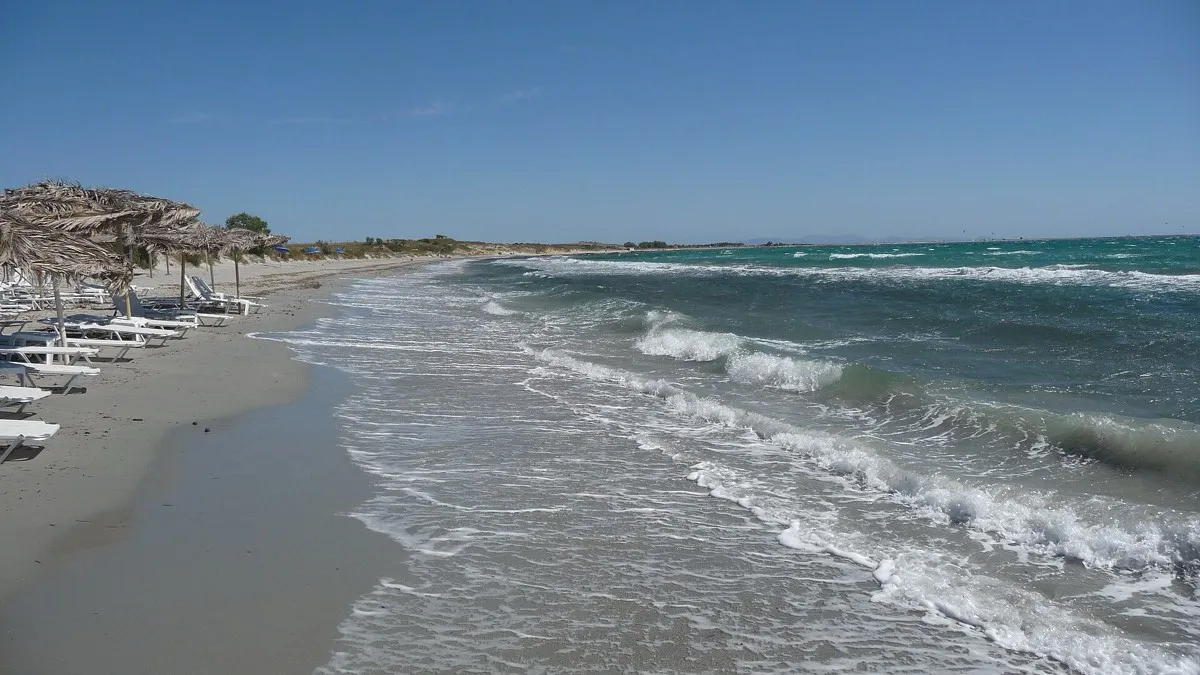
| Coordinates | ~39.87°N, 25.35°E, east coast of Limnos, near Kalliopi/Kondopouli |
| Wind | N/NE Meltemi, Beaufort 4–6, ~16–25 kt afternoons; windiest Jun–Sep (kiterr.com / kiteguide.com spot guides) |
| Water | 3 km bay: flat north end, chop mid-bay, small waves south; waist-deep sand ~250–300 m out; ~25°C in season |
| Relaunch room | North-end shallows let you stand up to repack and redeploy. No deep-water drill needed for most of the learner zone |
| Rescue | Club cover via Siroko Wind Club, Surf Club Keros, Keros Blue/KBC; take rescue-card cover where offered |
| Rules | Designated boating/swimming/surf zones; protected area (salt lakes and dunes); KBC gear rental requires VDWS level 4 |
| Level | All levels: north flat/shallow ideal for beginners; mid-bay chop and south waves for progression |
Ask for a European flat-water venue that isn’t a French lagoon or a Dutch inland sea, and Keros Bay is the answer I give. East coast of Limnos, a quiet Greek island; you fly in via Athens or Thessaloniki to Limnos airport (LXS). One thing up front: no parawing scene has formed here yet. Condition data below is proxied from the established wing and kite operations on the beach. Wind, water and launch requirements carry over directly, but nobody is teaching deploys at Keros today.
The Meltemi runs the schedule
The bay works on the Meltemi from the N/NE. Spot guides (kiterr.com, kiteguide.com) put it at Beaufort 4–6, roughly 16–25 kt, filling in through the afternoon. Season is mid-May to October. Windiest June through September.
For a parawing that range is comfortable rather than nuking. Expect mid-size canopies most days, not the 3 m² storm sizes a Tramontane venue like Leucate demands, and run your numbers through the parawing size calculator before you pack; a two-size quiver covers the Bft 4–6 spread. The catch is mornings. This is an afternoon wind, so plan sessions after midday and use the morning for the drive or the swim.
Where is the water actually flat?
Keros is a 3 km bay, and it is not uniform. Zoning matters more here than at most spots:
| Zone | Water | Who it’s for |
|---|---|---|
| North end | Genuinely flat, waist-deep sand ~250–300 m out | Learners, flat-water technique work |
| Mid-bay | Chop | Intermediates, upwind/downwind legs |
| South | Small waves | Progression into texture |
Water sits around 25°C in season, so no wetsuit calculus. Behind the shoreline lies a protected area of salt lakes and dunes, which keeps the place undeveloped and quiet.
What the layout does for a parawing
One advantage, one hazard.
The advantage is the north-end shallows. The single biggest stress point in early parawing progression is what happens after a crash: the stash, the untangle, the repack. At Keros you stand up in waist-deep water and sort your lines on your feet. Redeploying on water stops being a survival skill and becomes calm rehearsal. You can bank dozens of low-stakes repacks a session before you ever need one over deep water.
The hazard is the standard one, amplified nowhere but never zero. A stashed parawing means no visible sail, and boats cannot see a head at water level. Keros mitigates this better than most venues, being a contained bay with low motorised traffic and designated boating, swimming and surf zones. Still: learn where the boating zone is on day one and stay out of it, especially mid-bay, where you are furthest from either shore. Take rescue-card cover where the clubs offer it.
Infrastructure, rules and rescue
Three operations work the beach: Siroko Wind Club, Surf Club Keros, and Keros Blue / KBC Limnos, which runs wing and kite programs on F-ONE gear. UK operator Sportif Travel packages the spot. None teach parawing as of this writing. Bring your own deploy and stash skills, or build them at home first via the learn hub.
Rules to know. The beach runs designated zones for boating, swimming and riding. The surrounding salt-lake and dune area is protected, so treat access paths and the hinterland with care. And KBC requires VDWS level 4 to rent gear. If you can’t document a level, budget for lessons or bring your own kit.
Logistics
Limnos is a quiet island. That is the point. Camps operate near Keros itself, and the spot combines naturally with Greek-island travel either side of a trip; flights route via Athens or Thessaloniki. Don’t expect a Tarifa-style gear-shop strip. Bring spares, especially lines and a repair kit, because replacing anything on-island will be slow. The guides call it uncrowded relative to the Cyclades, but I won’t put a number on that without standing on the beach.
Within the flat-water spot directory, Keros belongs to the same family as the enclosed-lagoon picks (warm, contained, shallow, learner-first), traded against afternoon-only wind and thin local infrastructure. Pack for the second part.
FAQ
Is Keros Bay good for beginner parawing riders?
Yes. The north end is the learner zone: flat water, waist-deep sandy bottom extending roughly 250–300 m from shore, and warm ~25°C water. You can stand up after every crash, which removes the deep-water repack problem entirely. Note that KBC requires VDWS level 4 to rent gear, so complete beginners should book lessons rather than rental.
When is the best time to parawing at Keros Bay?
Mid-May to October is the season, with June–September the windiest window. The Meltemi blows N/NE at Beaufort 4–6 (about 16–25 kt) and is strongest in the afternoons, so plan sessions after midday.
How do you get to Keros Bay on Limnos?
Fly into Limnos airport (LXS) via Athens or Thessaloniki. There are no direct international connections mentioned in any spot guide. The bay sits on the east coast near Kalliopi and Kondopouli, and camps operate near the beach.
Is Keros Bay flat everywhere?
No. The 3 km bay splits into three zones: genuinely flat water in the north end, chop mid-bay, and small waves in the south. Ride the north for flat-water work and drift south only when you want texture.