Pounda, Greece
| Coordinates | ~37.00°N, 25.10°E, SW Paros facing Antiparos |
| Wind | Meltemi N/NW side-shore, channel-funneled; 18–24 kt (10–30+) |
| Water | Big flat water; shallow sandy first 5–10 m then deeper; chop when strong |
| Relaunch room | Open channel water; shallow sandy entry, no significant reef |
| Rescue | School rescue service for a fee |
| Rules | Local school beach regulations |
| Level | All levels; strong beginner/freestyle spot |
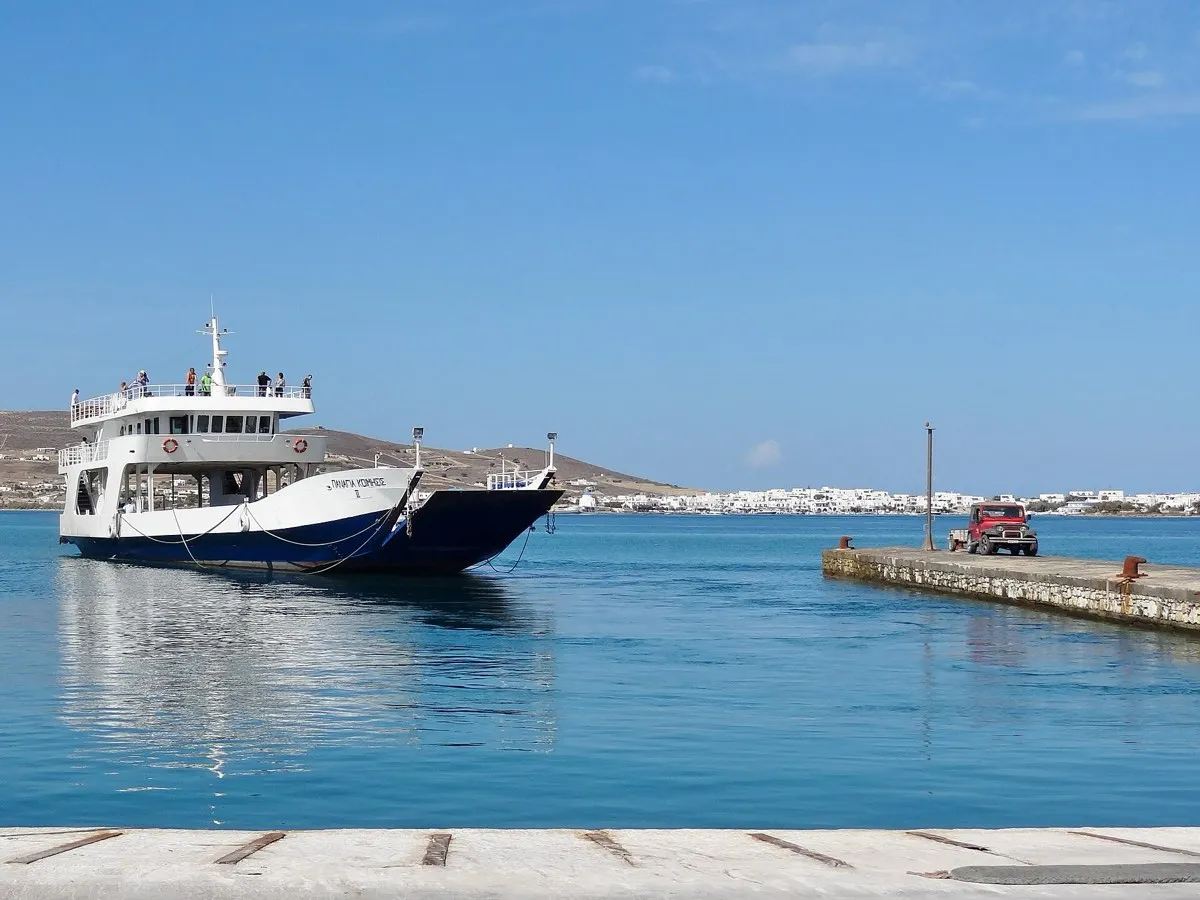
Pounda Beach sits on the southwest corner of Paros, facing Antiparos across a narrow channel, about 5 km from Paros airport. The channel is the whole story: the Meltemi comes in N/NW and side-shore, then funnels and accelerates through the gap between the two islands, delivering a reliable 18–24 kt across big, flat water in the summer months. The entry is shallow and sandy for the first 5–10 m before it deepens, with no significant reef. That combination — flat water, side-shore reliable wind, forgiving bottom — is why it is a well-known beginner and freestyle spot.
Before you read the rest as an endorsement: no documented parawing sessions are on record at Pounda. The suitability below is inferred from the resident kite and wing scene (ParosKite has been on the beach since 1993; Paros Kite Pro Center is there too) and from the water itself. It is a reasoned read, not proof of parawing riding.
The wind
The Meltemi is a thermal-reinforced synoptic wind, and the Paros–Antiparos channel accelerates it. Expect 18–24 kt as the working range, with days from 10 up past 30. It builds in the afternoons and is strongest June through September. When it is honking, the flat water picks up some chop, but this is not a wave spot — it stays broadly flat and open, good for practicing upwind riding and clean glide.
The parawing hazard: the ferry channel
This is the specific thing to plan around. The crossing to Antiparos runs boat traffic straight through the zone, and a stashed parawing sits low on the water — nearly invisible from a ferry or RIB. Keep well clear of the crossing line whenever the wing is packed. The peak-season launch beach is also tight and crowded, which compounds the problem. School rescue is available for a fee, but rescue cannot see what it cannot see: rehearse your self-rescue and drift and carry visible backup.
For other summer-Meltemi flat options and warm-water alternatives, see the flat-water spots hub, and match a wing to the gusty channel range with the parawing size calculator.
FAQ
Is Pounda good for learning to parawing?
The water is flat, shallow at the entry, and forgiving, and the Meltemi is reliable side-shore in summer — good ingredients on paper. But no documented parawing sessions confirm it; the read is inferred from the kite and wing scene, not proven parawing use.
How strong is the wind at Pounda?
The Meltemi is funneled and accelerated through the Paros–Antiparos channel, typically 18–24 kt with a range from 10 to over 30. It builds in the afternoons and is strongest June–September.
What is the main danger for a stashed wing here?
The ferry channel to Antiparos. Boat traffic is the key hazard because a stashed parawing sits low and is nearly invisible from a vessel. Keep clear of the crossing line and the tight launch beach in peak season.
When should I go?
June–September for the reliable Meltemi. Expect crowds and a tight launch beach at peak — Paros is a well-connected Cyclades island with plenty of lodging.