James Casey
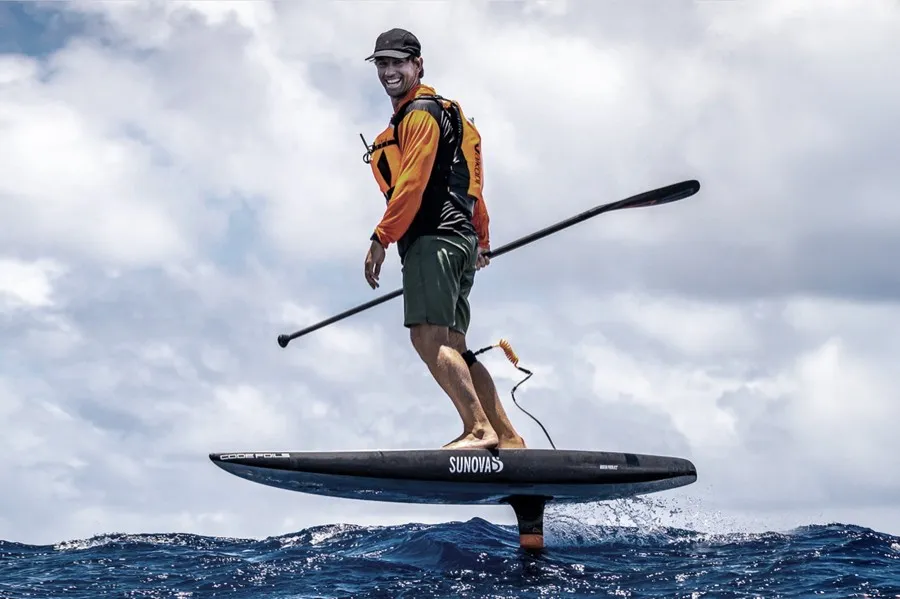
| Brand associations | Sunova / Go Foil; co-founder of Code (per our research; specific parawing models and sizes not published) |
| Coaching | Coach Casey online coaching |
Tips library: attributed, timestamped
“Always look in front of you and don't overpower the energy of the ocean by paddling or pumping too much… Less is more.”
Tonic Mag / LabRat Foiler Podcast ep. 023, as rendered in text coverage; not verified verbatim against audio
“An easy way to downwind if you are an OK multitasker.”
On parawing downwinding. Tonic Mag / LabRat Foiler Podcast ep. 023, as rendered in text coverage; not verified verbatim against audio
Downwind glide → Pumping and connecting bumps → Stashing mid-ride
Downwinding came first for James Casey; parawings showed up a decade into it. The Australian has been downwinding since 2014 (the Molokai 2 Oahu crossing was the original goal) and pioneered both SUP-foil and wing downwinding before parawings existed. He now runs Coach Casey, his online coaching program, and sits in the educator tier of our rider roster: a downwind authority who treats the parawing as the newest tool in an old craft rather than a new sport to relearn.
Why his take on parawings carries weight
He came to them from the hard direction. Paddle-up downwinding (the SUP-foil version Casey spent years mastering and teaching) has a notoriously brutal learning curve. Against that backdrop, his verdict stands out: he positions the parawing as possibly the easiest way to learn downwinding. Ten-plus years of paddle-up experience and a coaching business built on the discipline sit behind that comparison. Almost nobody else has the vantage point to make it, which is what separates it from marketing.
His brand associations are Sunova and Go Foil, and he is credited as a co-founder of the Australian foil brand Code. His specific parawing models and sizes are not published in our sources, so this profile doesn’t guess at them.
The core downwind teaching
Read the ocean, then get out of its way. His most-cited rule, from Tonic Mag and LabRat Foiler Podcast episode 023: “Always look in front of you and don’t overpower the energy of the ocean by paddling or pumping too much… Less is more.” Forcing speed, pumping hard when the bump is already doing the work, is the main habit he coaches out of people. The energy is in front of you. Your job is positioning, not power.
How he handles the parawing itself
Efficiently and early. Casey packs the parawing down while already up on foil, so the transition from powered riding to hands-free downwind glide costs nothing and the run never stalls. His own framing of the skill, per the same episode: parawing downwinding is “an easy way to downwind if you are an OK multitasker.” The multitasking is real: you are stashing a canopy while reading swell at foil speed. But it replaces a far harder problem, paddling up onto foil in open ocean.
What we don’t know
No parawing competition results: Casey does not appear in the 2026 SFT Downwind Parawing standings. No published parawing gear specs, follower counts or age either. Both quotes above reach us through text renderings of podcast and magazine coverage rather than verified audio transcripts, and are flagged as such. This profile runs shorter than the racers’ pages for exactly that reason. What is documented about Casey is a coaching philosophy, a good one, and padding it with inference would help nobody.
If his approach clicks with you, go next to the downwind glide and pumping technique articles. Both take the “less is more” positioning game he describes and break it into steps.