Rancho do Peixe to Vila Kalango, Brazil
| Wind | SE trades; Jericoacoara/Preá often 30+ kt; side-onshore |
| Water | 25–28 °C |
| Relaunch room | Side-onshore wind and waves push you back toward the beach |
| Rescue | Guides in the water plus 4×4 chase vehicle on safari legs |
| Rules | Commonly ridden guided, as part of operator-run safaris |
| Level | Advanced (strong wind, big waves) |
What is the Rancho do Peixe to Vila Kalango run?
Rancho do Peixe to Vila Kalango is a short, well-known downwind leg near Jericoacoara on the trade-wind coast of Ceará, Brazil. It is most often ridden as part of — or the finishing stretch of — the larger Cumbuco-to-Jericoacoara safari. Documented use here is wing-surf downwinding, covered by The Foiling Magazine; parawing use is inferred from that record, not established. This is an advanced leg despite its modest length, because of the strength of the wind and the size of the waves.
What are the conditions?
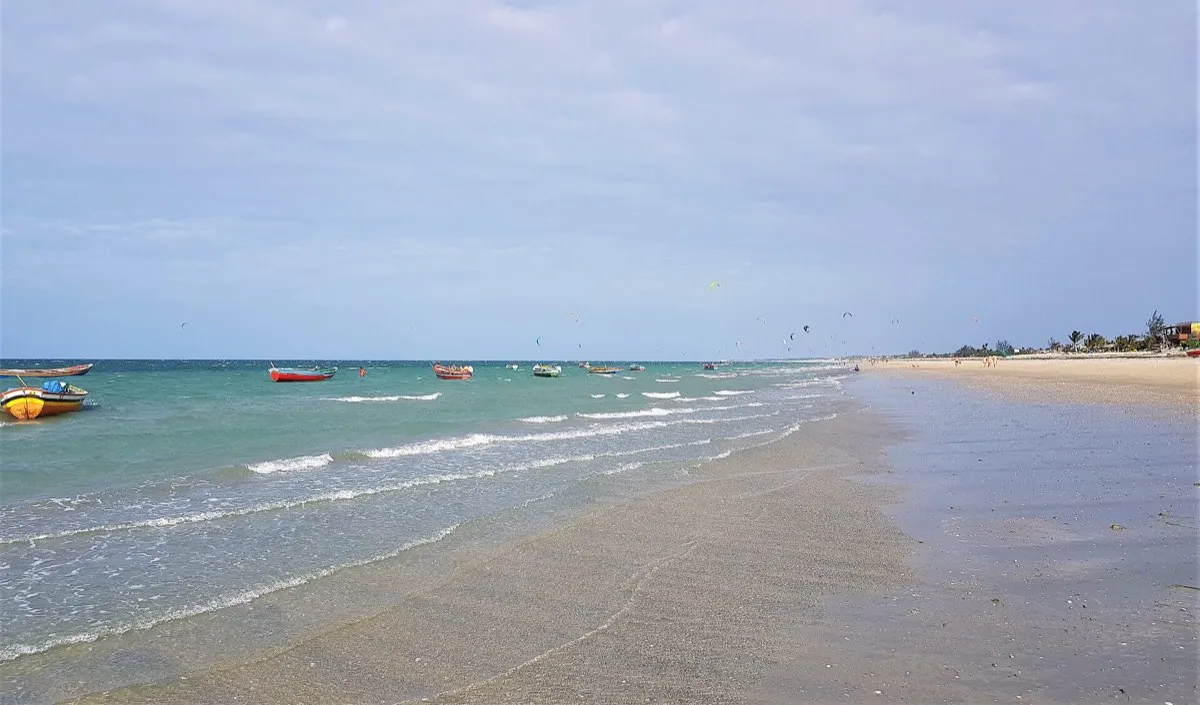
The coast runs on relentless side-onshore SE trades that reach their strongest around Jericoacoara. Jeri and nearby Preá regularly see 30+ kt with big waves, over warm 25–28 °C water. The season runs roughly August through February, peaking from around July/August into January.
The side-onshore angle means wind and waves push a downed rider back toward the beach rather than out to sea. When ridden within an operator safari, in-water guides and a 4×4 chase vehicle provide support, though the strong wind and surf still demand solid self-rescue and drift skills.
Is it suitable for parawing?
The honest answer is that it is untested for parawing. The published downwinding on this leg is wing-surf — the wider Ceará safari record is kite and wing. The conditions that make it a good wing run (steady side-onshore fetch, warm water, a short committing stretch of strong-wind glide) transfer logically to a parawing, but that is analysis, not a documented ride.
If you take a parawing here, size down hard for the 30+ kt trades — check the parawing size calculator — and treat the big waves as the main hazard. Compare it with the full-length safari and the rest of the downwind spots before committing.
FAQ
Can you parawing from Rancho do Peixe to Vila Kalango?
It is plausible but not documented. The published record for this leg is wing-surf downwinding. The strong side-onshore SE trades and warm water suit parawing, but you would be riding it as a pioneer, so plan conservatively and use local guides.
How does this leg relate to the Cumbuco safari?
It is the short, famous leg near Jericoacoara, often ridden as the final stretch or a standalone run within the larger Cumbuco-to-Jericoacoara downwind safari along the Ceará coast.
How strong is the wind?
Jericoacoara and nearby Preá regularly see 30+ kt with big waves during the season. This is a small-parawing, strong-wind venue, not a light-wind cruise.
When does it work?
Roughly August through February, peaking from around July/August into January, when the SE trades are most relentless.