Le Morne Downwinders, Mauritius
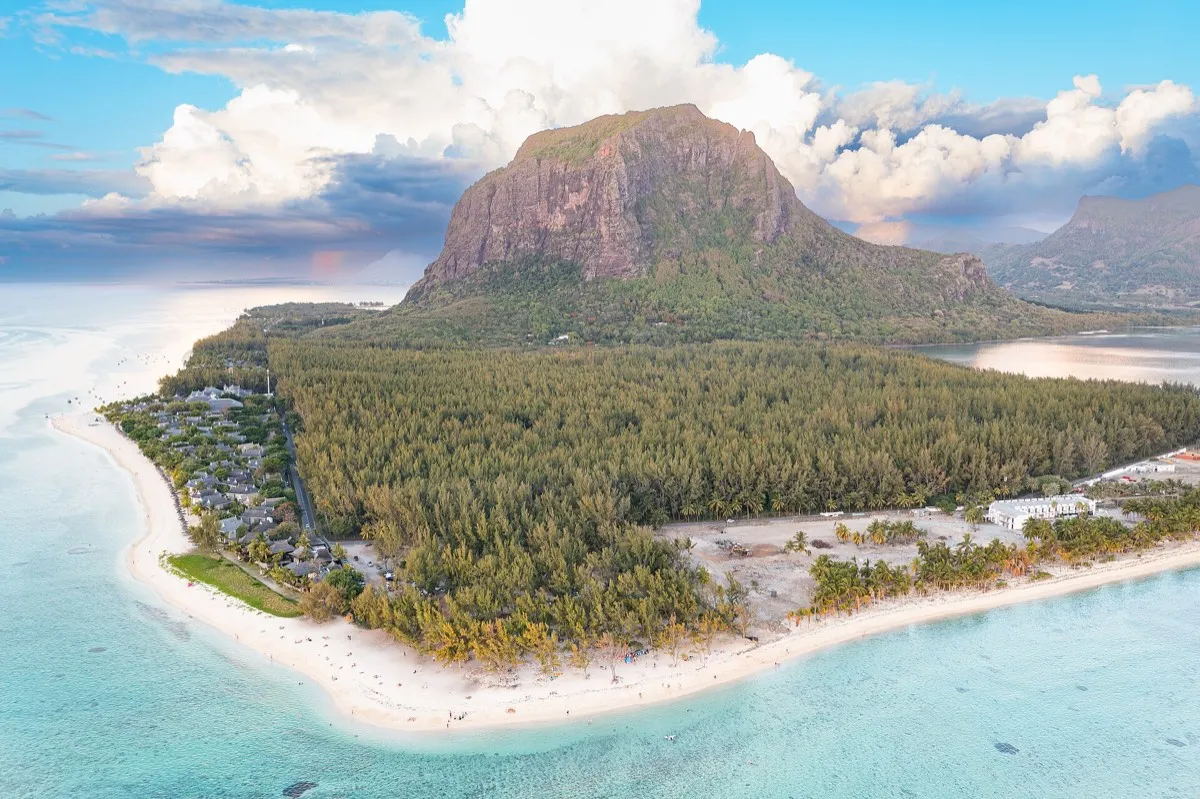
| Coordinates | Le Morne peninsula, SW coast of Mauritius; runs extend toward La Gaulette and nearby lagoons |
| Wind | SE trades, ~12–20 kt Nov–Mar, ~20–30 kt Apr/May–Oct; 300+ days/year above Force 4 (Windsurf UK) |
| Water | Warm year-round; flat lagoon inside, world-class reef swell (Manawa, One Eye, Chameau) offshore |
| Relaunch room | Cross/cross-onshore in the main zones drifts you back toward the reef line; the evening offshore switch removes that margin |
| Rescue | Boat rescue ~€100+; no rescue at all on huge closed-out days, so stay ashore |
| Rules | Board leashes standard on the outer reef; lagoon launch for all levels, the Point for advanced riders only |
| Level | Intermediate inside the lagoon; advanced–expert on the outer reef and downwind lines |
Drill stash-and-glide in a warm, flat lagoon before lunch, ride a real coastal downwinder after it. Le Morne lets you do both in the same day. The runs are 5–15 km lagoon-to-lagoon and point-to-point lines between Le Morne, La Gaulette and the neighbouring lagoons on the southwest coast, ridden on the same SE trades that made the spot a wing and kite reference (Planet Wingfoil Holidays, MACkite).
Runs and launches
Two main launches sit around the corner from each other: the Le Morne lagoon, which takes all levels, and the Point, advanced-only. Longer coastal lines toward La Gaulette need a car or taxi shuttle. There’s no dedicated downwind shuttle operation like Maui’s, so sort logistics before you launch. A full-service windsurf, kitesurf and wing foiling center runs off the JW Marriott beach (Planet Wingfoil Holidays), and most of the area’s schools and kite shops sit in La Gaulette, about 15 minutes from the beaches (MACkite).
The bumps are proper ocean wind swell inside and along the reef line, with world-class reef waves (Manawa, One Eye, Chameau) breaking offshore. Those waves are scenery, not the run. The downwind lines stay off the impact zones, and board leashes are standard practice anywhere near the outer reef.
When does it work?
| Season | Months | Wind |
|---|---|---|
| Mauritian winter (prime) | May–Oct | SE trades ~20–30 kt |
| Shoulder / best window | Jun–Nov | Most consistent trade weeks |
| Mauritian summer | Nov–Mar | SE trades ~12–20 kt |
Windsurf UK’s Le Morne spot guide puts the trades above Force 4 on 300+ days a year, which is why Le Morne ranks among the most reliable warm-water downwind venues anywhere. Rough sizing: around 4 m in summer, smaller in winter.
On a parawing
A natural single-stow venue. Launch in the lagoon, get on foil, stash mid-ride and glide the trade swell down the coast in boardshorts. The cross/cross-onshore angle in the main zones is the spot’s biggest parawing asset: blow a redeploy and you drift back toward the reef line and shallows rather than out to sea. That makes it a forgiving place to log redeploy reps on open water before you try them somewhere consequential.
The flip side is the evening switch. The wind can turn offshore late in the day, and a rider sitting on a stashed parawing in an offshore flow has very little working for them. Get your runs done early. Treat the switch as a hard cutoff. That one habit separates a relaxed Le Morne trip from a swim. Rehearse your self-rescue and drift plan before the first long line, not after.
Hazards and rescue
- Evening offshore switch. The defining local hazard. Be off the water before it happens.
- Reef. Sharp, shallow, and everywhere along the runs. Leash up on the outer sections and know where the passes are.
- Paid rescue only. Boat rescue runs about €100+ per pickup, and on huge closed-out days there is no rescue at all; the local rule is to stay ashore. Past the lagoon you are committed, so budget your judgment accordingly.
- Crowds and zoning. The lagoon is a busy kite and wing zone; the Point is for advanced riders. Keep your deploys clear of traffic.
Inside the lagoon this is one of the softest places on earth to learn the sport, so no, Le Morne is not extreme. The downwind lines are another matter: advanced-to-expert terrain that deserves the same float-plan discipline as any ocean run.
Who it suits
Intermediates who can already stash and redeploy will get the most out of it: warm water, reliable winter trades, and a flat-water fallback right inside the reef. Still working on basics? Start at the Le Morne lagoon flat-water spot and step up when redeploys are automatic. Experts get reef swell and long coastal lines, minus the cold-water tax of Cape Town or the Gorge.
For how Le Morne stacks up against the other classic runs, see the full spots directory.
FAQ
When is the best time to parawing at Le Morne?
The Mauritian winter, roughly May to October, when the SE trades run about 20–30 kt; the best overall window is June–November. Mauritian summer (Nov–Mar) still works but drops to around 12–20 kt, so you'll want a bigger parawing, around 4 m.
Are the Le Morne downwinders good for beginners?
Not the downwind lines themselves: those are advanced to expert, with reef hazards and open coast. The inside of the lagoon is intermediate-friendly, and it's the right place to get stash and redeploy solid before committing to a point-to-point run.
Is there boat rescue at Le Morne?
Yes, but it's paid: figure €100 or more per pickup. On huge closed-out swell days there is no rescue at all, and the local advice is simply to stay ashore. Plan every run as if you'll self-rescue.
What size parawing do I need at Le Morne?
Around 4 m in the lighter Mauritian summer (roughly 12–20 kt), smaller in the 20–30 kt winter trades. Carry range if you're doing longer coastal lines, because you commit past the lagoon.