Cauípe Lagoon (Cumbuco), Brazil
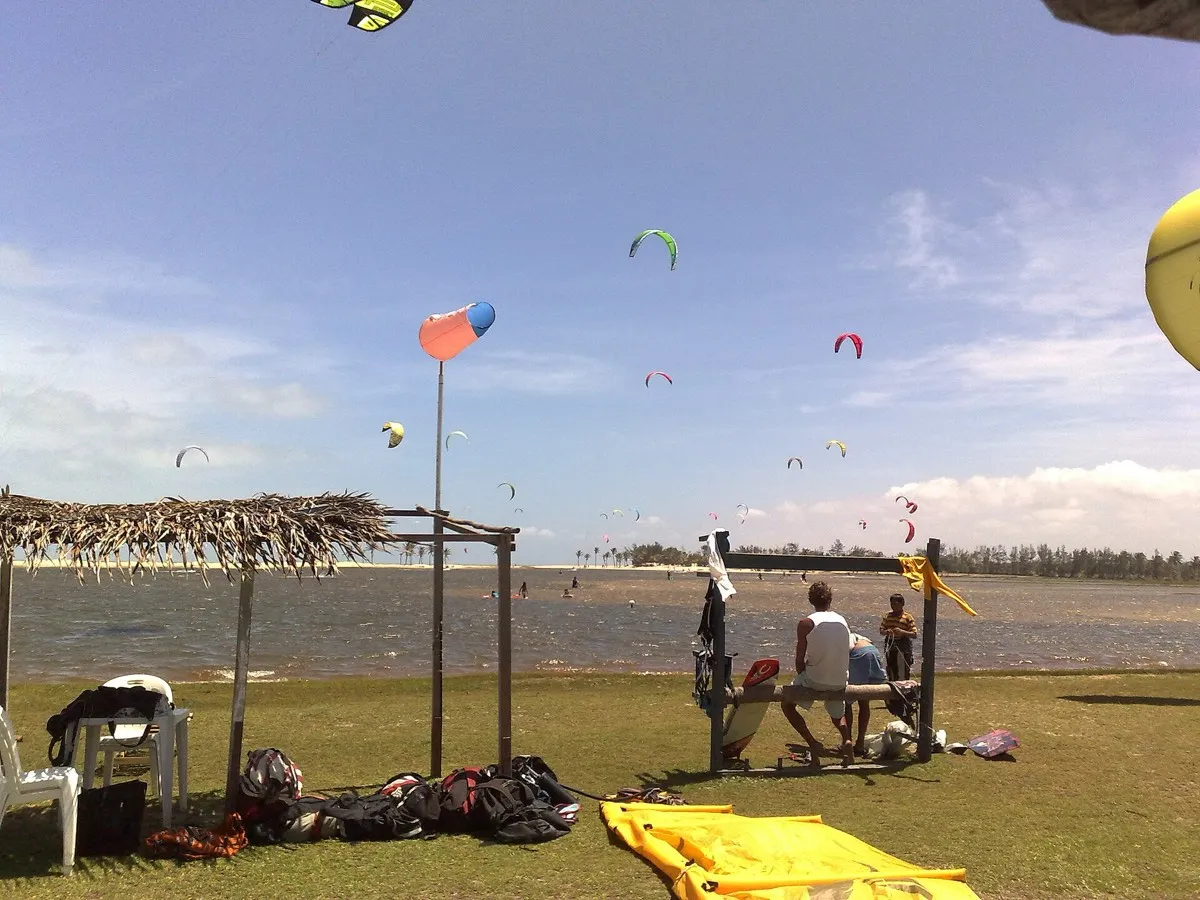
| Coordinates | ~3.66°S, 38.79°W. Ceará, ~10 km N of Cumbuco; Fortaleza (FOR) ~45 min |
| Wind | E trade (Alísios), 15–25 kt all day, Jun–Dec, peak Aug–Oct (kitesurftheworld.com) |
| Water | Butter-flat lagoon behind a narrow sandbank; shallow/standing in much of it, recently deepened for foils |
| Relaunch room | Contained lagoon, no boat traffic; 30+ riders by midday in season |
| Rescue | No dedicated rescue cover noted at the lagoon; standing depth over much of it; schools (Windtown, Bê Kite Cauipe) in the Cumbuco area |
| Rules | IKO zone etiquette: south end for beginners, north end for advanced |
| Level | Beginner–advanced |
Cauípe is the lagoon that made Cumbuco famous, and it maps almost perfectly onto what a parawing foiler wants: flat water, steady wind, no boats, a soft place to fall. One caveat before the details. Parawing-specific spot information barely exists yet, so the conditions below come from kite and wingfoil sources that share the same wind and water requirements. No parawing sessions here are documented yet.
Why Cauípe works for parawing foiling
The lagoon sits behind a narrow sandbank right next to the ocean. That geometry is why the water stays butter-flat while the trade wind runs over it uninterrupted. For a parawing rider the combination matters more than it does for a kiter, because once you stash mid-ride you have no visible sail, and a contained lagoon with zero motorised traffic is the safest possible place to be invisible. Compare open-water venues, where a stashed wing plus boat traffic is a genuine hazard.
Depth is the second parawing-specific advantage. Much of Cauípe is standing depth, so a failed redeploy or a blown water start ends with you standing up, not swimming a self-rescue. The lagoon has been deepened and widened specifically so foilers can ride (Kitesurf the World). The flip side is real, though: some patches will still catch a full mast.
Wind
Easterly trade (the Alísios) at 15–25 kt, blowing all day with no thermal dependence, June through December with the peak in August–October (Kitesurf the World, Planet Kitesurf). That range covers most riders on a single mid-size parawing; if you want a second size for the top of the range, start with our size calculator. And because the wind runs all day, you can schedule around the crowd instead of around a thermal window. Lake riders don’t get that luxury.
| Fact | Value | Source |
|---|---|---|
| Wind direction | E trade (Alísios) | kitesurftheworld.com |
| Typical strength | 15–25 kt, all day | kitesurftheworld.com |
| Season | Jun–Dec, peak Aug–Oct | kitesurftheworld.com |
| Distance from Fortaleza (FOR) | ~45 min | research directory |
| Distance from Cumbuco | ~10 km north | planetkitesurfholidays.com |
Zones and crowds
The lagoon runs on IKO-style etiquette: the southern part is for beginners, the northern part for advanced riders. Respect it. The beginner end is full of people who cannot yet look upwind while riding.
Crowds are the real downside. By midday in season you can share the water with 30+ riders, most of them kiters with 20-plus-metre lines. For a parawing foiler that is the main hazard, since your stashed wing and low profile are hard to see from behind a kite bar. Ride early morning or late afternoon and the problem mostly disappears. If you do get rolled in traffic, the wipeout recovery priorities are the same as anywhere: board first, canopy second, get visible.
Logistics, rescue and the fine print
Cumbuco is a full kite town (MACkite, Freeride Kitesurf). Windtown’s full Duotone center is the best-known anchor, local outfits such as Bê Kite Cauipe work the lagoon itself, and around them sit beachfront hotels, buggy transfers to the lagoon, and Fortaleza nightlife 45 minutes away. The lagoon is bare by comparison: beach bars and not much else, and no dedicated rescue cover in any source I have. The saving grace is that “rescue” at Cauípe usually means standing up. Still, treat it as a self-reliant spot. Don’t ride alone at the empty ends of the day you specifically came for.
The cons, plainly: midday crowds, shallow patches that limit mast choice, minimal facilities at the water, and a transfer every session unless you ride down from Cumbuco. No dealbreakers on that list. All of it real.
How it compares
Within the top tier of flat-water venues, Cauípe trades Bonaire’s kite-free calm at Lac Bay for stronger infrastructure and cheaper logistics, and it is far busier than Brazil’s quieter alternatives up the coast. If your priority is guaranteed wind plus a real town, Cauípe wins; if it’s empty water, look further northwest. Browse the rest of the directory at the spots hub, and if a Ceará trip turns into a downwind itch, that is a different discipline with its own glide skillset.
FAQ
Is Cauípe Lagoon good for beginner parawing foilers?
Yes, with a caveat. The south end of the lagoon is the designated beginner zone, the water is flat and mostly standing depth, and the trade wind is steady rather than gusty. The caveat is depth: some patches are too shallow for a full foil mast, so beginners on foils should stay in the deepened sections and check depth before committing to a water start.
When is the best time to ride Cauípe?
June to December is the trade-wind season, with August–October the peak. The easterly Alísios blow all day at 15–25 kt with no thermal dependence, so unlike lake spots you are not tied to an afternoon window, which is useful, because riding early also beats the midday crowd.
Is Cauípe Lagoon deep enough for foiling?
Mostly, now. The lagoon has been deepened and widened so foilers can ride, but parts remain shallow enough to stand in. Good for rescue, bad for a mast strike. Scope the deeper lines before you ride and treat any area where kiters are standing as a no-foil zone.
How do you get to Cauípe from Cumbuco?
The lagoon sits about 10 km north of Cumbuco; riders reach it by buggy or car, or ride downwind from Cumbuco itself. Fortaleza airport (FOR) is roughly 45 minutes from Cumbuco. Facilities at the lagoon are limited to beach bars, so bring water and sun protection.