Cabarete, Dominican Republic
| Coordinates | ~19.75 N, 70.42 W; Puerto Plata (POP) airport ~25 min |
| Wind | E/NE trade + thermal; light mornings, 20-25 kt noon-6 pm; 250-300 windy days/yr (Liquid Blue Cabarete) |
| Water | Flat with semi-chop inside the reef; reef waves break ~200-600 m offshore; some inside areas under 55 cm deep |
| Relaunch room | Inside-reef band between the beach and the wave line ~200-600 m out; shallow patches limit foilable width |
| Rescue | No formal patrol noted; side-onshore trades drift a downed rider to the beach; dense school presence on Kite Beach |
| Rules | No formal permit; zone etiquette: windsurf area upwind, wind shadow near shore |
| Level | Intermediate-advanced overall (crowds, reef); Cabarete Bay beach best for beginners |
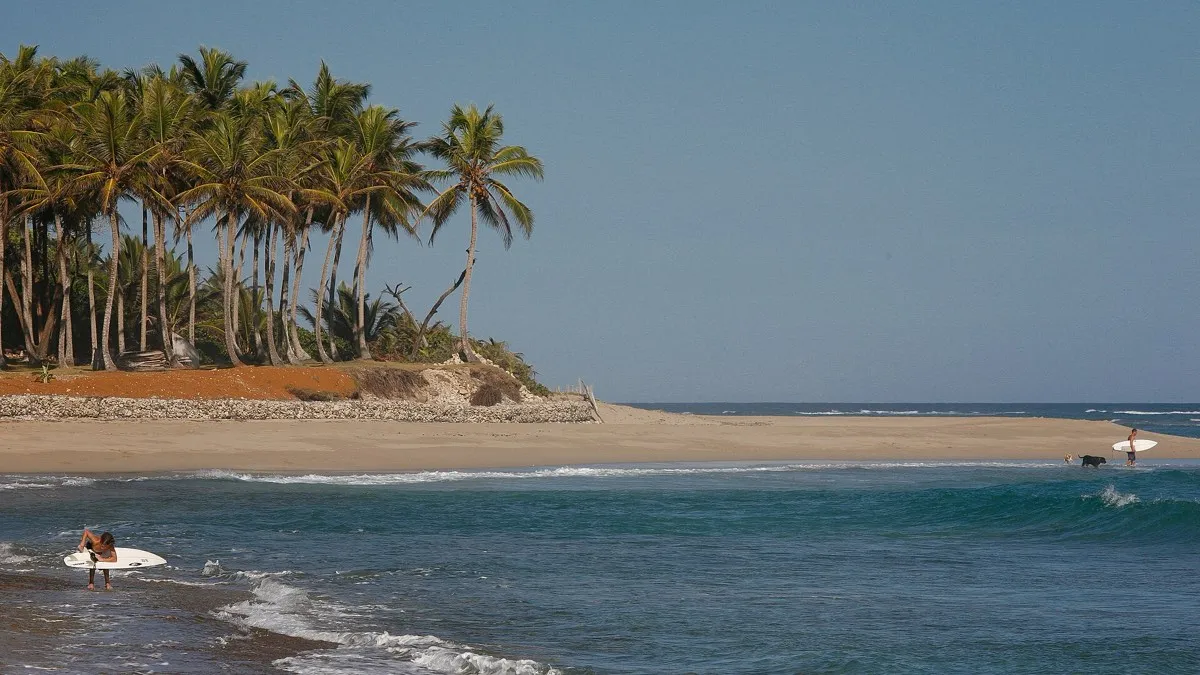
Every spot list files Cabarete under “flat water.” The label needs an asterisk. What you actually get is a band of flat-to-semi-chop water inside a barrier reef, with glassy waves breaking on that reef roughly 200-600 m offshore. For a parawinger the split is useful. Flat-ish water for stash practice and glide work in the afternoon trades, and a wave zone within sight for the day you outgrow the inside. Just don’t arrive expecting a Bonaire-style lagoon; riders who know the spot say the reef zone “barely goes flat.”
The rideable zones
The inside water runs along several named beaches: Cabarete Bay, Kite Beach, Bozo Beach and La Goleta. The wave line sits about 200-600 m out on the reef, per the local school guides (Liquid Blue Cabarete). Encuentro, further along the coast, is a dedicated wave spot, not a parawing flat-water option.
One inside-reef catch bites harder on a foil than on a kiteboard: some inside areas are under 55 cm deep. Not enough water to clear a full mast. The genuinely foilable band is therefore narrower than the visible water.
| Zone | What it is |
|---|---|
| Cabarete Bay beach | Beginner corner, best learning water |
| Kite Beach / Bozo / La Goleta | Main inside-reef flat/semi-chop riding |
| Reef line (~200-600 m out) | Glassy waves, advanced |
| Encuentro | Separate wave spot, not flat water |
Wind and season
The engine is E/NE trade wind reinforced by a thermal. Mornings are light, then the wind fills to 20-25 kt from around noon until 6 pm (Liquid Blue Cabarete). The spot claims 250-300 windy days per year, with the best windows in January-March and June-September. In practice that makes Cabarete an afternoon spot. Surf or do ground-handling work in the morning, rig the parawing after lunch.
Light morning, strong afternoon also means the wind builds through your session rather than dying. Pick a size that will still be manageable at 25 kt, or check the parawing size calculator against the top of the range rather than the bottom.
The parawing angle
The stand-out safety feature is wind direction: side-onshore. Come off the foil, blow a deploy, or end up drifting with the parawing stashed, and the wind pushes you toward the beach, not out to sea. A stashed parawing means no visible sail, which is the core hazard of this sport anywhere with traffic, so a spot that drifts you home by default is worth a lot. No formal rescue patrol is noted for the inside zone, but the school density on Kite Beach means eyes on the water most of the day.
The cons:
- Crowds. Cabarete is one of the busiest wind-sports towns in the Caribbean. Kites, wings and windsurfers share the inside water, and a rider sitting low with a stashed wing is hard to see from a kiteboard at speed. Ride defensively. Practice your repack somewhere out of the main lanes.
- Shallow patches. The sub-55 cm areas will stop a mast dead. Learn the bottom before you push deep down the inside.
- The reef. The line between semi-chop and breaking wave is 200-600 m out, which is closer than it sounds when you’re gliding downwind. Know where you are relative to the reef before you stash.
- It isn’t butter-flat. For pure first-glides flat water, Lac Bay in Bonaire or Cauípe in Brazil are flatter and simpler. Cabarete’s edge is variety, not glass.
Rules, schools, logistics
No formal permit. The working etiquette puts the windsurf area upwind and keeps everyone out of the wind shadow near shore. Infrastructure is dense: Liquid Blue, Cabarete Kite Point, Kite Club Cabarete and Swell Surf Camp all operate here, and ION Club has also run a Fanatic/Duotone wing center in town, though Cabarete no longer appears on ION’s current destination list, so check before counting on it. Wing lessons are standard, so parawing-adjacent instruction and rescue-adjacent eyes exist even without a formal patrol. Puerto Plata airport (POP) is about 25 minutes away, and beachfront kite hotels like Villa Taina put you on the sand.
The town rhythm fits the wind rhythm: waves or rest in the morning, parawing from noon. If Cabarete is your first trip with a parawing in the stash belt, spend the first session mapping depth and crowd lanes before you commit to longer inside-reef glides. More flat-water options are in the spots directory.
FAQ
Is Cabarete good for parawing foiling?
Yes, if you treat it as an inside-the-reef spot. The flat-to-semi-chop band in Cabarete Bay, Kite Beach and Bozo works well for parawing riding and stash practice, while the reef waves 200-600 m out are a separate, advanced game. It is not a butter-flat lagoon like Lac Bay in Bonaire.
When is the best time to go to Cabarete?
January-March and June-September are the best windows, with E/NE trades filling to 20-25 kt from around noon to 6 pm. Cabarete logs 250-300 windy days a year, but mornings are light, so plan wing sessions for the afternoon.
Is Cabarete flat water or waves?
Both, in separate zones. Inside the reef you get flat water with semi-chop; the famous glassy waves break on the reef roughly 200-600 m offshore, and Encuentro nearby is a pure wave spot. Locals say the reef zone itself barely goes flat.
Is Cabarete OK for beginner parawingers?
The Cabarete Bay beach zone is the beginner-friendly corner, and wing lessons are standard at the local schools. Overall the spot rates intermediate-advanced because of crowds, the reef, and shallow patches under 55 cm where a foil mast touches.